

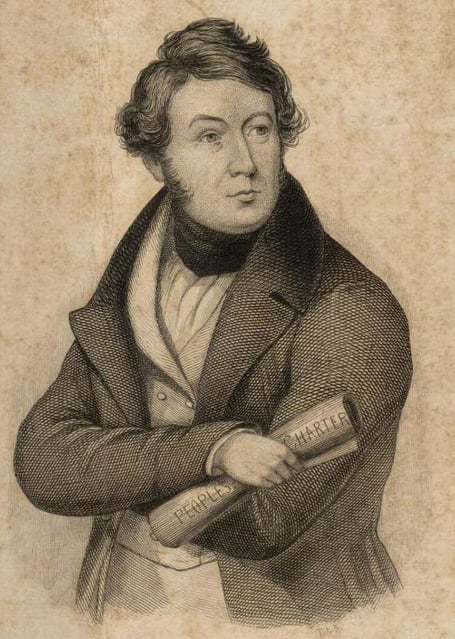
THREE men who were sentenced to be hanged drawn and quartered were mighty relieved 180 years ago to be woken and told they were reprieved.
But the Chartist leaders of the Newport Rising – John Frost, Zephaniah Williams and William Jones – then found themselves marched from their cells at Monmouth Gaol to be taken under armed guard to a steamer at Chepstow.
And ahead lay a perilous 12,000-mile journey to the wilds of Van Diemen’s land (Tasmania) in Australia, where they were told they would spend the rest of their days at the isolated Port Arthur convict camp.
The trio were convicted of treason in January 1840 at Monmouth Shire Hall for their role in the uprising, when troops fired on 10,000 demonstrators demanding democratic rights and shot 22 dead.




They were the last to ever receive the dreaded sentence of hanging, drawing and quartering, and spent nearly a month at Monmouth Gaol jail off today’s Hereford Road fearing the worst.
But in a post on its Facebook page, Chepstow Museum recalled that just after midnight on February 3, 1840, they “were roused from their beds in the condemned cell at Monmouth gaol and informed that their death sentences had been commuted to transportation for life.
“They were then taken in a horse-drawn prison van accompanied by police, their gaoler, and escorted by 24 soldiers of the 12th Lancers in the dead of night to Chepstow where the paddle steamer Usk had been commissioned to take them on the first leg of the journey to the prison hulk at Portsmouth. Battered by gales they arrived there 13 days later.”
That was just the start as an horrendous four-month journey to Tasmania on board the 425 ton Mandarin convict sailing ship awaited.
All those sentenced to transportation thought it a fate worse than death.
As soon as they arrived in the wastelands of Tasmania, Frost, the former mayor of Newport, was sentenced to two years’ hard labour for making a disparaging remark about Lord John Russell, the Colonial Secretary.
But ultimately the Chartists had a happier ending, winning pardons, with Frost returning to England in 1856 to a hero’s welcome from democracy campaigners.
Comments
This article has no comments yet. Be the first to leave a comment.