

The 18 community members of the “Citizens’ Jury” that will make a recommendation – not the final decision – on the general location of the new Forest hospital to replace the current facilities at the Dilke in Cinderford and Lydney have been selected.
THE jurors – plus five reserves – have been selected by independent community interest company (CIC) Citizens’ Juries to be “broadly representative” of the Forest as a whole.
They were drawn from 218 people who applied and will sit alongside four local healthcare professionals to take evidence from a range of experts and community groups over five days from Monday, July 30.
The jury will then make a recommendation on a location to the boards of Gloucestershire Care Services NHS Trust and the Gloucestershire Clinical Commissioning Group – which are behind the £11 million project – who are due to make the final decision at the end of August.
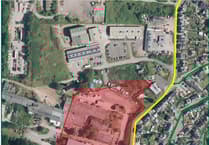


The recommendation will be on a general location in one of the areas around Cinderford, Coleford and Lydney, not on the precise site.
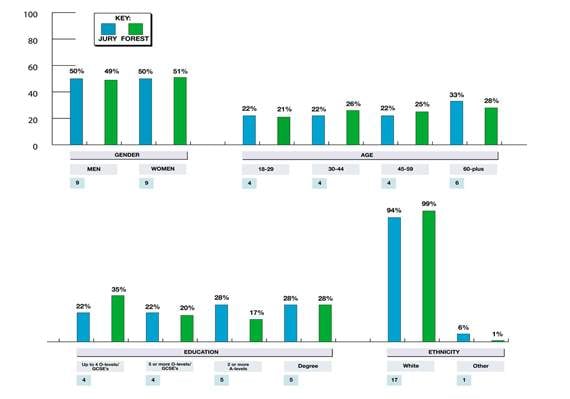
Given that the jury’s decision is likely to be closely scrutinised, a welter of information on the characteristics of this group of largely private citizens who are taking on a very public role, has been released.
We know about the make-up of the group in terms of gender, level of education, and the ethnicity of the jurors, based on figures from the last UK census in 2011.
The figures compare the composition of the jury with the general population of the Forest for each of the characteristics, making it possible to see how representative it is.
Given that whichever location gets the nod – the recommendation is likely to be controversial – a map showing which part of the Forest each of the jurors is from has been produced.
Citizens’ Juries director Malcolm Oswald said: “As this citizens’ jury is about the location of a new hospital, a particularly important criterion for selecting people for this jury was postcode of residence.
“A good spread of postcodes was achieved, balancing geographic spread across the Forest of Dean District with population density,” he added.
Despite the very public role, we may not necessarily find out the identities of individual jurors.
Mr Oswald said: “As they are not official or elected representatives, the identity of the members of the citizens’ jury will not be made public.
“Citizens’ Juries CIC will not publish or release any juror’s name without their express consent.
“This allows jurors, particularly those who do not wish to comment on their experience publicly, to remain free from enquiries from the media and the general public throughout the event.
“It also protects jurors from being approached and/or put under pressure by individuals or organisations seeking to influence them and/or the overall outcome of the event.”
The jury will begin hearing evidence from 1pm on July 31 at the Forest Hills Golf Club in Coleford with the process being “facilitated” by Citizens’ Juries.
The question of why the jury can only make a recommendation was raised at a recent meeting of the Forest Health Forum, held at the West Dean Centre in Bream, and whether the boards can come to their own conclusion on the location.
In public sector jargon, the jury is not an “accountable body” so it cannot make a decision of this magnitude.
As to whether the boards have to go along with the recommendation of the jury, the simple answer is no.
The more complicated situation of one of the boards going with the jury and the other not cannot be ruled out either, although that seems unlikely as they have each been in agreement until now.
Caroline Smith, of the CCG, told the forum: “Ultimately, they (the two boards) are the decision-making group and they could make a different decision to the recommendation, but would have to be very clear about why that was the case.
“So in the same way the jury would be expected to say why they are making their decision and on what basis, the Care Services board and the CCG governing body would have to do the same.
“It is likely we will come to the same conclusion but it is not impossible that we could come to a different conclusion.”
Comments
This article has no comments yet. Be the first to leave a comment.