

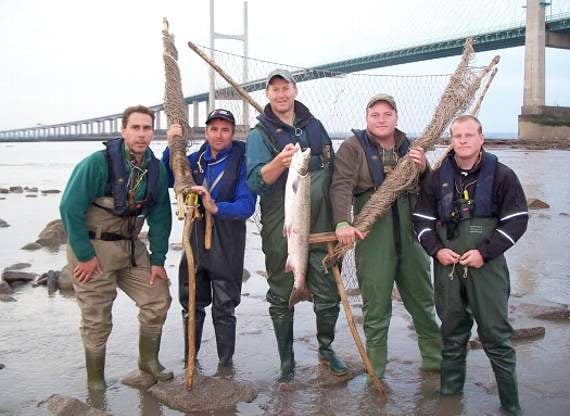
FISHERMEN who use ancient netting methods to catch salmon in the Severn’s tidal waters are looking forward to good catches and lots of new initiatives at the start of their centenary year.
The Black Rock Lave Net Heritage Fishery near Portskewett was founded 100 years ago after local fishermen returned home from the First World War to find their fishing rights had been taken away.
The group fought to regain their traditional right to fish in the centuries-old lave net method, and two descendants of the founders are among those still fishing today at the last surviving lave net fishery in Wales.
“The fishery has evol-ved over the decades to become what some regard as a model heritage fishery promoted by the fishermen and others as a tourism and heritage site,” said secretary Martin Morgan.




“The fishery is the last remaining traditional fishery on the estuary and one reason it has survived is the acceptance of a strict catch limit. It has been a long hard road, but today it is vibrant with community and youth involvement.
“We are pro-active in promoting the fishery and regularly appear in books, magazines, on radio and TV, and also demonstrate and exhibit at shows and schools.
“We have many initiatives planned for the year which will celebrate the centenary milestone.”
Dating back hundreds of years, lave fishing involves a ‘net’ made from three types of wod which are cut in the winter when the sap is down – pine for the head board (yoke), willow for the arms (rimes) and ash for the handle (rock staff).
When the lave net is folded up, the fishermen use the rock staff for wading through deep water feeling for holes and gullies, and also use it to stay upright in the fast flowing estuary, which has the second greatest tidal range in the world.
The net is opened and lowered into the outgoing tide which rushes through the net, and the fisherman waits in hope for a fish to swim in.
See www.blackrock lavenets.co.uk for more information.
Comments
This article has no comments yet. Be the first to leave a comment.