
THE scheme to build a barrage across the Severn could bring floods, destroy wildlife and livelihoods, says the RSPB.
An official Dutch report obtained by the bird protection group details the flood risk as well as the devastating impacts for wildlife, fishing, tourism and shipping from the construction of a storm surge barrier across Holland's Oosterschelde estuary in the 1980s.
The Oosterschelde is very similar to the Severn Estuary, where a barrage could have similar consequences.
The RSPB has learned officials at the Department for Energy and Climate Change knew about the Dutch report in 2008, but have still not published their own report into the effects of a barrage on the tides and sediments of the Severn Estuary.




The Dutch report found that:
1. Increased erosion has led to the loss of mudflats along the estuary, leading to higher waves and water levels. Huge sums will have to be spent on strengthening coastal defences to protect lives and property.
2. By 2050, the tidal flats of the Oosterschelde will have more than halved, falling from 11,000ha in 1986 to about 5,000ha in 2045 and 1,500ha by the end of the century.
3. Salt marshes will disappear from all but the most sheltered locations by 2050.
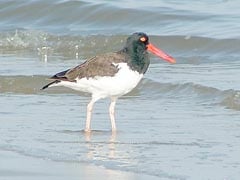
4. Less intertidal habitat will mean less shellfish and fewer birds. Oystercatcher numbers will have crashed 80 per cent by 2045 with other species "awaiting the same fate".
5. Shipping channels will become shallower and harder to navigate.
6. Shellfisheries will be hit because of loss of habitat for the cockles and mussels.
7. Tourism will be hit by the loss of wildlife interest.
Dr Mark Avery, the RSPB's director of conservation, said: "This report makes grim reading. It is the closest we can get to proof that a barrage across the Severn will devastate the estuary.
"Although smaller, the Oosterschelde is very similar to the Severn Estuary in many ways and it is being damaged beyond repair, something our Government appears to have known since 2008.
"The Dutch built their barrier to prevent deadly storms from claiming lives. Ironically, it has now led to an increased risk of flooding behind the barrier, but it could be argued they had little choice at the time.
"On the Severn, we do have a choice. A barrage would not be built to stop storm surges but to harness the tides and generate electricity. There are other, far less environmentally damaging ways to do that, yet Government studies to date have been fixated on barrages.
"We have long said the Government should invest in innovative schemes, which offer the potential to put the UK and UK engineering at the forefront of tidal power without the risk of floods, loss of wildlife and livelihoods.
"We know the Government have produced their own report on how a barrage would affect the tides and sediments of the Severn. The big questions now are what does that report say, and why can't we see it?"
Comments
This article has no comments yet. Be the first to leave a comment.