

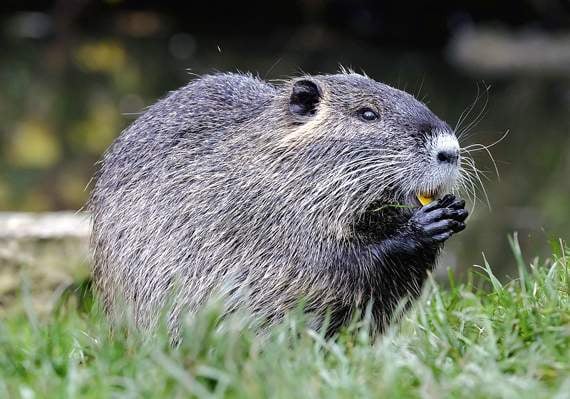
BEAVERS will be returning to the Forest of Dean for the first time in nearly 500 years after the government gave the go ahead for a release scheme.
A family of four beavers is to be released into a fenced 6.5-hectare enclosure next spring above Lydbrook, in a bid to help alleviate flooding.
UK Environment Minister Michael Gove gave the go ahead on Friday (December 8) for the Forestry Commission scheme, which will see two adult beavers and two kits released at Greathough Brook to help improve biodiversity and build dams and ponds.
Villagers have previously backed the idea, hoping the animals will help prevent a repeat of 2012’s huge floods.



And it could be the first of many other schemes in the Forest and beyond, as government guidance sets out a framework for assessing applications for further trial releases across England.
Beavers were hunted to extinction in Britain for their luxurious pelts and the castoreum waterproofing oil they secrete, with the last recorded wild specimen shot in Scotland in 1526.
Mr Gove said: “The beaver has a special place in English heritage and the Forest of Dean proposal is a fantastic opportunity to help bring this iconic species back to the countryside 400 years after it was driven to extinction.
“The community of Lydbrook has shown tremendous support for this proposal and the beavers are widely believed to be a welcome addition to local wildlife.
“The project is an example of the wider approach we are taking to enhance biodiversity, become the first generation to leave the environment in a better state for future generations and deliver on our plans for a Green Brexit.”
Scientists believe the beavers may be able to hold back enough water to help with flood alleviation for Lydbrook by quickly constructing natural dam structures and creating new habitat.
A similar scheme run by the Devon Wildlife Trust has been hailed a success, with two beavers creating new dams and pools on a 200-metre stretch of the River Otter.
Kevin Stannard, Forestry Commission Deputy Surveyor for the Forest of Dean, said: “Our proposal to introduce captive beaver in to the Forest of Dean has strong backing from the local community and we are developing the project with fantastic support from Environment Secretary Michael Gove.
“We will continue our detailed planning, including designing a robust fence to keep the beaver enclosed; securing healthy, disease-free beaver and collecting data from the monitoring of the water flow in the brook. We will continue to give updates as the project develops.”
The proposal put forward by the Forestry Commission and approved by ministers has been granted full licence approval by Natural England (NE), which has been key to ensuring the enclosure will be secure.
NE will consider further applications for possible trial releases on a case by case basis, in line with the new guidance.
All the beavers will be fully tested for disease before they are released and a management plan will be put in place to make sure the enclosure remains secure. The Forestry Commission will also closely monitor the ecology and hydrology of the scheme throughout the trial which will help to understand the longer-term impacts and benefits to the local environment.
The project is being financed by the Forestry Commission as part of its normal operation activities supported by Forest Holidays.
A meeting at Lydbrook village hall to discuss the scheme was attended by around 100 residents, who expressed their support.
Forest councillor Sid Phelps (Lydbrook, Green) has described it as “an innovative idea to deal with both climate change and the risk of increased flooding.”
“There’s a little nervousness in the Forest of Dean because of the boar but the Forestry Commission did an excellent job of assuaging any fears,” he added.
Derek Gow, a beaver expert, said: “This is a tremendous opportunity. The science suggests these animals will hold back 6,000 cubic metres of water.
“This has the potential to prevent a once-in-30-years flood event. These animals will also open the forest canopy to light and create a biodiversity jewel in this forest.”
Cllr Chris McFarling (Green, Newland and St Briavels), the Forest Council’s Cabinet Member for Environment and Wildlife said: “Beavers are the most natural water engineers we could ask for.
“They’re inexpensive, environmentally friendly and contribute to sustainable water and flood management.
“Successful pilot studies in Devon and Scotland suggest that beavers boost the local biodiversity, helping a greater number of plant, amphibian, fish, bird and invertebrate species flourish.
“They slow the release of storm water with their semi-porous dams, decreasing the flooding potential downstream.
“Water quality is improved as a result of their activities. They also allow water to flow during drought conditions.
“Financially they are so much more cost effective than traditional flood defence works so it makes sense to use this great ‘value for money’ opportunity.
“The reintroduction of beavers will be in a carefully targeted, fenced off area and they will be closely monitored by scientists and local volunteers.
“Supporting the Forestry Commission with this natural initiative is a good example of how we can work together to help solve problems and benefit local communities.”
Comments
This article has no comments yet. Be the first to leave a comment.