
WHEN I first read John Muir's letter (Review, June 27) I applauded many of the points he raised. It is true that the United Kingdom cannot be understood without reference to its Judeo- Christian heritage from the Dark Ages until 1914.
Our laws, literature, customs, calendar and much else are underpinned by Biblical and Church teaching.
This is one reason why many universities offer scripture lessons to students before studying the novels of the 19th century.
I think we get our national church on the cheap in this country. As a boy I loved to visit old churches to study the historical record of the place in which they were located.

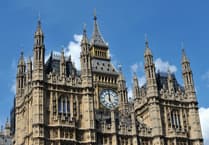


Even as a young man I greatly enjoyed their architectural tapestry, especially of those from the Middle Ages and I studied their importance as art in stone, glass, bells and organ pipes.
I sat in their stillness surrounded by a world of noise and haste.
Above all I observed their place as a repository for all things family – from the birth and baptisms of babies, the weddings of their grown up sons and daughters, to the funerals of their stillborns and grandparents. Even their place as a spotlight for those tragically killed in war.
All this infused in the very fabric of these ancient buildings, now all too often empty and vulnerable.
When a parish church closes and is turned into apartments the loss to that community in incalculable.
Half the problem faced by many small parish church communities is the upkeep of their buildings.
At Christmas and for weddings I almost detect panic in the pews if anyone has nothing less than a £1 coin to put in the collection and if the service goes on too long some have to leave for a quick smoke.
However, I cannot close my eyes to the realities of this nation's religious past. Too often church leaders have been resistant to any social change.
Where were they in their support of William Wilberforce, who was often isolated from his church colleagues who had financial interests in the colonies?
The modern debate surrounding the place of women priests has all but subsided but what a pity most church leaders hadn't worked for better conditions for those women and children in the mines and factories of the 18th and 19th centuries.
I hesitate to mention Ireland because the division between Catholic and Protestant was not the only (or even the main) reason for 'The Troubles' but it was a major part.
Dare I bring up the subject of homophobia? Above all, I cite the failure of the Church of England to associate with the poor and powerless of the past when faced with the might of the legal system, when it all too often allowed that Christian-influenced system to work solely for the rich and powerful of which it had become a part.
We are 'not' a Christian country any more. I doubt Britain ever was in reality. If it was it ceased to be during World War I and the end of innocence. As a Christian I shall not be wishing a return to the notion of a Christian country. Religions do not cope well with power: its adherents misuse and abuse it and those in positions of power use religion as a weapon.
Christ is about the loss of earthly power, as is made clear on the Cross. For my part I will do my bit in the community to love my neighbour and my God, to value people of all faiths and none, for I detest nationalism as well, and I shall pray – in church and in the beauty of our countryside. It's safer that way.
– Mark Parry, Broadwell.
Comments
This article has no comments yet. Be the first to leave a comment.