
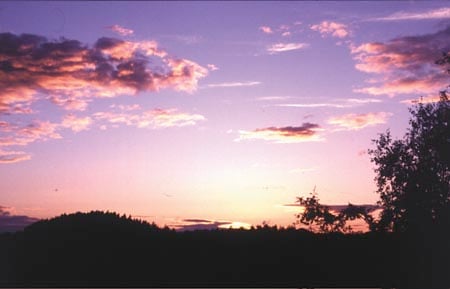
REVIEW WILDLIFE EXPERT IVAN PROCTOR GOES IN SEARCH OF CREATURES OF THE TWILIGHT
Lobsters, peach blossom and a red-necked footman were just some of the things we found in the oak woods near Parkend one night recently.
And in case anyone things we might have had a glass too much of Freeminers let me quickly explain that these are some of the hundreds of different moths to be found in the woods during the summer.
Moths come to light and by setting up a light in the woods after dark they can be enticed to it and caught in a box beneath it. There you can identify them and release them back into the woods.

Almost any light will attract moths so you see them fluttering around outside lights and uncurtained windows. Buildings lit overnight act as giant moth traps and many can be found inside the next day. I am told that over 40 different kinds of moths have been identified in the toilet block at Norchard.
But if identifying different moths is something you find a bit difficult (I admit it is beyond me) there are many other things to go out into the woods and find on warm summer nights.
Woodcocks, nightjars, owls, bats, deer and glow worms all start their day as the sun sets and they are all easy to see if you are in the right place at the right time.
At this time of year the right time is late. You need to drift out so that you are where you want to be by about half past nine. It's likely that anywhere in the Forest you will see woodcocks roding soon after that time.
'Roding' is a curious display flight by male woodcocks when they fly just above tree top height with very slow wing beats and making a curious call which is a croak followed by a whistle. It is quite unmistakable and audible a couple of hundred yards away on a still summer evening.
Nightjars start their unique churring song soon after and this is a great year for nightjars in the Forest with birds occupying at least nine different sites.
The Park at Tidenham, Spruce Ride, Oakenhill and Crabtree Hill are a few of the places where they are calling. There has even been a bird just outside Coalway on a clearfell area beyond the Forestry Training Centre. That bird is probably an unpaired male who has sometimes wandered over and sung on Gorsty Knoll. It is worth listening for nightjars on any large open area in the woods.
In the last two weeks nightjars have been starting to sing from 9.45 p.m. onwards and by then it is getting dark enough for bats to be fluttering about. They can be seen almost anywhere, even around gardens.
The first ones out are the large, high flying noctule bats then later the smaller ones, almost impossible to identify unless you are an expert.
Water attracts bats because of the many insects associated with it. Even small ponds around the Forest will concentrate bat numbers. One night I went down to the old railway viaduct at Lydbrook where, by quarter past ten, there were at least 20 bats skimming round low over the river.
Owls get noisy as the light fails. Family parties of tawny owls can be very vocal with a mixture of hoots and shrieks coming out of the darkening woods. At this time too you might get a glimpse of a fallow deer crossing a woodland ride. Finally by eleven o'clock or later when it is almost completely dark you can find down in the vegetation the bright green shining light that is made by the female glow worms.
Some of the best places to see them are by the old railway lines. I have seen their glowing lights at Drybrook Road Station, Boy's Grave, Dark Hill and Parkend. They are probably well scattered throughout the Forest but go unobserved because it is so late before they can be seen.
So take advantage of the summer nights to go out and discover an enchanted Forest, a dark and friendly place and not the least bit 'spooky'. The only word of warning would be not to forget the insect repellant. The midges are ferocious this year!