
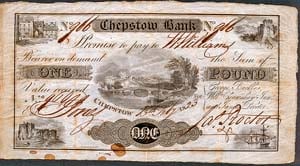
A RARE £1 note printed in Chepstow nearly 200 years ago and featuring an engraving of the old Wye Bridge has sold at auction in London for £560.
The note, issued on February 13 1823 by the Chepstow Bank, was expected to go for between £300 and £400 in the sale at the Spink auction house.
It was one of six Chepstow notes from the 19th notes that sold for a total of £1,930 alongside two notes issued by the Monmouthshire Bank.
The Monmouthshire was founded in 1790 by William Curre of Itton Hall with George Smith but went bust just eight years later so its notes are comparatively rare.




One of the bank's five guinea notes fetched £380 – which was valued at £300-£400 – while a £10 note, which included a note about a bankruptcy went for £570 which was also within its estimate of between £500 and £600.
The other Chepstow Bank notes were a £1, a £5 featuring an illustration of the castle, town arch and port and a £10 note with an illustration of the Wye Bridge issued in 1823.
The bank was formed in 1790 by six local businessman but went bust in 1829.
The other notes were printed by the Chepstow Old Bank which operated between 1827 and 1866.
A £1 note issued by the bank was of interest because it misspelled the names of one of its founders, Crawshay.
Tom Badley, a banknotes expert at Spink, said: "This is the finest and most complete group of Chepstow provincial banknotes. It is unique in its quality."
Head of banknotes Barnaby Faull added: "Merchants would get together and set up their own banks.
"But their notes – which were like IOUs – could only be used locally so when these provincial banks went bust, as the Chepstow Old Bank did, their notes were completely worthless.
The notes were put up for sale by property tycoon David Kirch whose collection of British banknotes is worth £1 million.
Comments
This article has no comments yet. Be the first to leave a comment.