
WITH the ongoing controversy about freemining rights, may I inform your readers of the basic facts according to the law. I have in front of me the current version of the Dean Forest (Mines) Act 1838(c.43), which is an Act for regulating the opening and working of Mines and Quarries in the Forest of Dean and Hundred of St Briavels in the County of Gloucester. The relevant parts as written in law are as follows:
Who shall be deemed Freeminers.
X1V. All male persons born or hereafter to be born and abiding within the said Hundred of St Briavels, of the age of 21 years and upwards, who shall have worked a year and a day in a coal or iron mine within the said Hundred of St Briavels, shall be deemed and taken to be Free Miners for the purpose of this Act.
Quarrymen to be deemed Free Miners for certain Purposes.


XV. All male persons born or hereafter to be born and abiding within the said Hundred, of the age of 21 years and upwards, who shall have worked a year and a day in a stone quarry within the said Forest, shall for the purposes of the Act, so far as relates to having leases of stone quarries within the open lands of the said Forest, but not otherwise, be taken to be Free Miners.
Public Act.
XC. This Act shall be deemed and taken to be a Public Act, and shall be judicially taken notice of as such by all judges, justices, and others.
Not being a Freeminer didn't mean that you couldn't be employed in a Forest mine, but legislation in 1842 limited this.
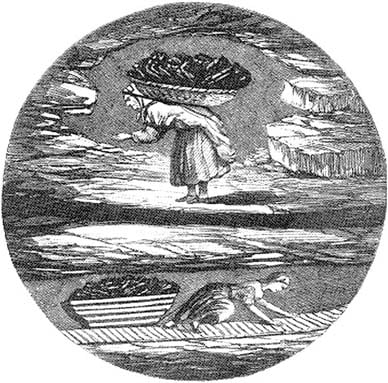
The Mines Act of 1842 prohibited the the employment of females and boys below the age of 10 in mines. This was as a result of a Royal Commission set up by Parliament at the behest of Lord Salisbury and initiated by Sir Robert Peel in 1840, which discovered horrific work conditions , brutality, terrible accidents, long hours, lung diseases for hewers, hurriers and trappers of both sexes, some as young as four years. This Act was amended several times to further improve working conditions for boys, but girls and women remained totally banned from working underground in any mine. This Act still stands.
Timothy Mountjoy was a reliable witness to the working practices in the freemines of that period. Women were employed hoisting coal out of shafts up to 25 yards deep, loading it onto carts and mules and working long hours in all weathers. Tiny children worked 12 hour shifts opening and closing ventilation doors deep underground in coal pits day after day, often in complete darkness, for 3 shillings a week. Older children 'progressed' to hodding for a 72 hour week, dragging the loaded hods on their hands and knees, for 7 shillings a week.
In the iron mines children sorted stones and rubbish from the iron ore or carried 'billies' on their backs full of ore to the surface, often up long, vertical ladders. In both types of mining they often died in accidents, were badly injured, malnourished, diseased, exhausted, stunted and totally uneducated, so the Act was the first step to the rescue of these poor souls from the depredations of virtual slavery that has gone on for centuries in our beautiful Forest of Dean.
There is a myth that coal wasn't widely mined in the Forest until the late 18th Century at the beginning of the Industrial Revolution.. In fact in the mid 13th Century the Crown had a profitable business going receiving rents from coal mines and making a half pence for every load of coal and ore carried on the River Severn. Coal was being dug in several Bailiwicks in the Forest, but was of secondary importance to iron ore until the 17th Century.
The Romans were the first recorded people to exploit iron ore deposits in the Forest, initially through opencast mines, known as scowles; although the Celts were almost certainly there before them from around 450 BC. Unfortunately the Celts didn't have written language and the Romans murdered all their Druids.
Red and yellow iron ochres oxides were recorded as being mined prior to the 15th Century and used mainly in the cloth dying industry, although another interesting practical use was made of red oxides by local sheep badgers for breeding purposes. – John Belcher, researcher, Gage Library, Dean Heritage Centre.