
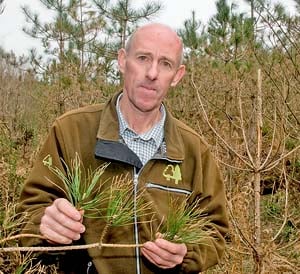
A CRIPPLING fungal disease which targets Corsican Pine is behind a wave of recent tree felling in the Drybrook Stenders area.
And the menace, Red Band Needle Blight, is casting a long shadow over the future planning of commercial tree crops in the Dean, says Forestry Commission planning and environment officer Peter Kelsall.
"It is spread by spores and the major effect is defoliation, the net result being reduced growth. In extreme cases the tree dies," he told the Review.
Corsican Pine has been looked upon as one of the answers to climate change, he said, because of its tolerance to warmer conditions. It was widely planted in the hope of its becoming a very valuable future crop and there are around 700-800 hectares in the Forest. However the emergence of blight here in the Dean and in other parts of the country had thrown the programme into reverse.




"The blight was first noticed about 10 years ago and nobody took a great deal of notice. But now we know its effect we have not planted any more Corsican pine for the last four or five years."
As well as clear-felling, Forestry workers are thinning some of the Corsican Pine plantations to see if this will curb the disease.
"It grows in damp, humid conditions and the hope is that getting more space among the trees will inhibit its spread," he said.
But he added the blight had clearly dealt a blow to future timber-production targets.
"It is also important because it limits our choice of what to plant for the future," he said.
"We are finding more and more that new diseases are coming along, and it is getting harder and harder to make the best choices for 40 or 50 years ahead."
Comments
This article has no comments yet. Be the first to leave a comment.