
The recent letter "Look to the future" (Review, March 30) supporting the regeneration plans for the old Northern United site and the north end of the Cinderford valley requires a certain amount of comment, I feel. I have every respect for Messrs Harvey and Ruck for having undergone years of unpleasant and demanding toil underground at the site – not something to be romanticised and it's a good thing such days are behind us. But the remarks made by these two authors in their letter paint a somewhat dismissive picture of the concerns raised by conservationists and environmentalists over the location, nature and scale of the development project, and a conversely rosy-eyed vision of the benefits these plans will bring for local people, particularly the young unemployed and home-seekers.
Whether, as the authors contend, "the land around them is an eyesore" is debatable. Much of the Forest waste and reclaimed industrial sites could be described in such terms.
It's the same at Lightmoor, Cannop, Soudley, Woorgreen, all along Cinderford's Linear Park, all up around Foxes Bridge and similarly so in a 100 or more other places across the Dean. It's the characteristic Forest post-industrial habitat type – one that was recognised as an important element in the Dean's "special landscape area" designations accompanying the discussions around AONB status for the Forest. Such places are usually rich in animal and plant species, often of considerable rarity and national importance.
Tearing it up to create yet another ugly urbanised mass of nondescript housing, dreary workplaces and fume-choked roads is no improvement on the alleged "eyesore"; it's simply creating a (genuine) eyesore of far worse proportions.


If we're going to start "developing" any place that has a few nettles, groundsel or wildflower patches, then we'll soon be getting rid of quite a lot of Britain's stately homes, castles and other historic tourist sites as well, because many of these have their less tidy areas.
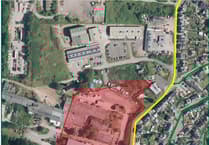
The woodland, tumpland, rough pasturage, colliery workings, waterways, ponds and other habitat zones that go to make up the Hawkwell, Northern United and Steam Mills nexus is home to a dazzling array of plant and animal species. Many have official protected status, both nationally and internationally; others are becoming so pressured by the threats which modern life and the demands for land bring that they may soon be in need of such protection. The faith that some of the pro-development people have in their ability to "mitigate" any dangers to the continuing existence of such species is so naive as to border on lunacy but they still wish to forge ahead anyway.
You do not stick a housing estate of 175 houses (projected population 500+), a college campus catering for at least a 1,000 hyperactive teenagers, hotel/bar/ restaurant (and their over- refreshed patrons), visitors' centre, business units, office blocks, cycle tracks and the like, together with large expanses of parking lots, streets and a main road cutting through valuable woodland habitat that is home to several endangered species, illuminate the whole with a heavy input of street and highway lighting, and then sit back and expect (hope?) there will be no change in the flora and fauna. There will be. A very big and drastic change.
"Are bats more important than people?" ask the letter's writers. Depends what kind of people we're talking about. If we don't deal robustly with our own population growth and that of the world as a whole, and immediately, the only "future" we have to look forward to is an increasingly lawless, aggressive, violent one of too many people chasing after too few resources.
But all we're doing is building more and more new townships and communities all over the land, and slaughtering nature as if it were an irrelevance instead of a necessity. Cinderford is already overpopulated, overbuilt and over-motored, and you can see the result any day of the week. And we're going to "improve" all this by adding-in yet more houses, roads, traffic and people. Beam me up, Scotty, this planet isn't healthy any more.
The letter writers are obviously sincere in their concerns for the town's young people, and in their hopes that the Arc development will bring these kids jobs, security and prosperity. It was mentioned at the planning inquiry in October of last year that the intention is to move away from the "shed"-type employment buildings that currently dominate Cinderford Industrial Estate, in favour of more high-standard employment usages. I'm guessing we're talking about jobs for educated, IT-savvy or "creative" employees here, rather than the manual-trade-dominated ones that might serve Cinderford's youth more.
So it's looking like it's a middle-class-friendly future we're envisaging here, and this is borne out by the response the FODDC planners gave to the concerns I raised in my initial written responses about the Northern Arc proposals, prior to the inquiry being held, namely about how many of the new houses and jobs actually would be for Cinderford people. As expected, it was admitted that, in many cases, people would come from elsewhere to live and work on the Arc site. So all we are doing is giving up Forest land for others to benefit from.
It's very easy to look on from a safe distance and say people who live locally should "support" the loss of their local dog-walking, fishing or wildlife-watching amenity instead of "trying every trick in the book to stop it". But I just wonder what would be the response if the plans for a new college and all the other developments were diverted to a site somewhat "closer to home"? Perhaps we could simply chop down, oooh, a mere five or six hundred trees around Marion's Well or Berry Hill and squeeze-in all these buildings there instead? I don't think Mr Harvey would be happy with that, and I don't blame him.
Or perhaps Councillor Molyneux would be a little less eager to "get cracking" with this "vision" (waking nightmare?) were it to be redirected to his own affluent, leafy milieu. St Briavels, is it, Pat?
Leave Northern Arc alone, please. It has been violated by mankind for far too long, during the opencast years. Now it should be left for nature to recolonise in peace. For ever.
There are buildings already in existence standing empty in the area and in need of renovating for new (local) families. How about recasting Cinderford's Swan Hotel not as a vertical drinking barn – which simply adds to the quota of late-night trouble and vandalism – but as a suite of bedsits and small apartments for local homeless individuals and families? Or buying-up some of the other properties that have stuck in the estate agents' logjams, and renovating them for the same purpose? Or just not "exciting" or "visionary" enough for some people?
I have bats flitting round the sunset side of my home on warm evenings. The recent mini-heatwave brought several out, including one larger species that repeatedly coursed back and forth past the window, swooping on insects taking their maiden flight.
And I have memories of the magnificent fallow buck that clattered out onto the path in front of us when we were undertaking the on-site visit to Northern Arc last October. This fabulous creature was in full challenging, who-are-you-who-invade-my-kingdom mode, real Monarch of the Glen stuff. And I think it was right to be angry.
– Andrew Stephens, Cinderford.
Comments
This article has no comments yet. Be the first to leave a comment.