
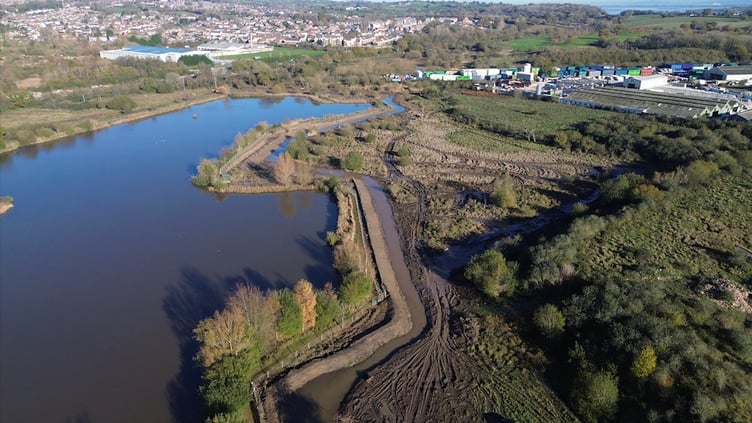
THERE have been “encouraging signs of progress” over flooding in Lydney, says Gloucestershire County Council.
Despite last winter being one of the wettest on record, the number of properties affected by flooding remained comparatively low.
Cllr Ashley Bowkett (LibDem, Barnwood): “Storm Claudia brought significant rainfall last November, yet the impact on homes was far lower than during similar events in the past.
“As an illustration, during November 2024 to February 2025 Gloucestershire had more than 140 property-related flood reports, whereas during the same period in 2025/26 we received only five.
“Although there are many variables, this reduction has been cautiously welcomed.
“In Lydney, there are encouraging signs of progress.
“At Forest Road, flood water did not reach gardens, let alone homes, despite properties flooding during a similar event in 2020.
“At Lakeside Avenue, work on Plummers Brook and downstream improvements have significantly reduced risk on what had previously been one of the county’s most frequently flooded streets.”
Along with other bodies, the county council has delivered an extensive programme of flood resilience improvements over the past five years, helping to better protect homes, businesses and infrastructure.
The council has received £838,000 for the Cannop natural flood management project.

The Cannop catchment is becoming a leading example of natural flood management at scale.
Work focuses on slowing the flow of water, restoring rivers, creating wet woodland and using natural materials to work with the landscape rather than against it.
Cllr Bowkett said: “These projects sit alongside a wider programme of work happening across the county, from property flood resilience measures and capital schemes to a growing pipeline of natural flood management projects.
“Much of this work happens quietly, often out of sight. It is the council and its partners “fixing the roof while the sun is shining” – surveying drains, clearing watercourses, modelling flood risk, building storage areas, working with landowners and helping communities prepare for future weather events.
“The result is simple but powerful: when the next storm arrives, the impact is reduced and homes and businesses are better protected.
“While the weather has been very hot and sunny, we know the rain will come again, and thanks to the work happening across Gloucestershire, we are better prepared when it does.
“What’s really encouraging is that this isn’t about one big project, but consistent, joined-up action across the county.
“The recent dry weather is a reminder that extreme weather can take many forms.
“After prolonged dry periods, intense rainfall can lead to rapid surface water flooding and flash floods, so it is important that people do not become complacent.
“I would encourage everyone to take a few minutes to look at the council’s flood guide and make sure they know what to do if flooding affects their area. Being prepared can make a real difference when severe weather strikes.”
The flood guide offers practical advice on how to protect property, create a flood plan and recover after a flood.
It is available at www.gloucestershire.gov.uk in the planning and environment section.
Comments
This article has no comments yet. Be the first to leave a comment.