
OFFA'S Dyke, the earthwork traditionally believed to have been built for King Offa of Mercia in the eighth century, may in fact be Roman.
The latest theory of the origins of the defensive wall between Beachley and far North Wales could rewrite local history books if proved correct.
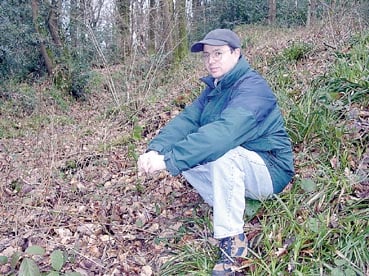
But archaeologist John Hoyle, working for the county archaeologist on a special project to unveil more of the the Forest of Dean's past, says it is very hard to prove any facts on the matter.
"It wasn't until the 19th century that the Gloucestershire section of the wall was even regarded as part of Offa's Dyke," he said.

-x.jpeg?width=209&height=140&crop=209:145,smart&quality=75)


"It was only classed as a part when historians lined it up with other parts of the wall on the map. But in fact there is a big gap between Redbrook and a spot north of Lydbrook where it begins again.
"While there are strong folklore links between the northern part of the wall and King Offa there are no such links for this end."
The latest theory on the wall's origin comes from the remains of a fire under one section which has been carbon dated to the mid-400s AD.
Researchers behind the latest proposals say it looks as if it was built by Anglo-Romans as the Romans began losing control of their far-flung empire and Rome came under Barbarian attack.
This left the British vulnerable to attack by Germanic invaders, Irish pirates and hostile Welsh tribes.
'Offa' is also the name of a Germanic god, and the invading Saxons might have given his name to the giant barrier they found when pressing west beyond the Marches.
To place the dyke in this era would add 300 years to its age.
John Hoyle says the theories are interesting but hard proof is another matter – the wall – a bigger structure in terms of labour and materials than the Pyramids – is very good at keeping its secrets.