

WATER bosses have been urged to splash the cash on improvements after sewage flooded a major business.
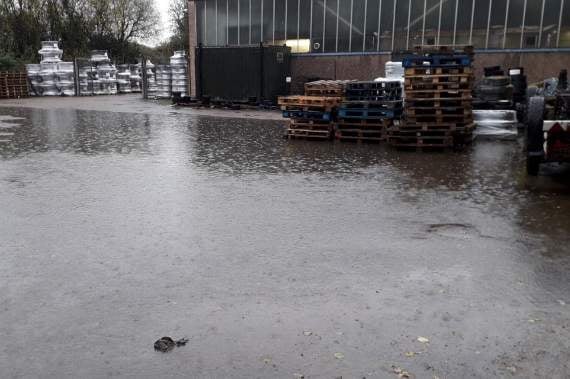
The toilets at the Watts Group base in Mead Lane, Lydney, and much of the company’s yard were underwater from Thursday through to Saturday morning, making the facilities unusable.
The business believes the main treatment plant across the railway track is inadequate for coping with heavy rain conditions and backs up under pressure, causing sewage to overflow.
And it has called for urgent investment in the plant to improve it and the local sewer network capacity.



But while Severn Trent Water apologised for the problems caused by the “heavy rain” putting more demand on the waste water system, it did not address the firm’s specific complaints.
Watts facilities administrator Andrew Bryant said: “We were backed up and flooded into the toilets at Mead Lane from Thursday through to Saturday morning, making them unusable.
“Substantial sections of our yard and car park were also under water.
“The area around Mead Lane and our site has a long history of flooding and we suffer from both sewer and surface water.
“It flooded our building in June 2018 during a period of heavy rain and then a flash storm, as the system could not cope.
“We’ve known for a number of years about capacity problems at the treatment works and this is only set to become more of a problem with all of the development.
“The main gravity sewer at Mead Lane running in the flood defence system backed up.
“The system is simply unable to process the current capacity in the sewer system through the treatment works,” he added.
“Severn Trent will not spend on infrastructure and say there is not an issue, but when we have an event and the sewers are backed up, their guys on the ground are saying the plant can’t cope.
“Investment is needed to stop surface water getting into the system when there is heavy rain.”
The firm reported the latest flooding to STW, but said the utility told them there was nothing they could do.
Mr Bryant said he also spoke to an Environment Agency official last Thursday who was inspecting the River Lyd all the way back from the harbour about the possibility of opening the harbour sluice gates to relieve pressure, although nothing was done.
“Flood defences installed in 2007 have gone some way to protect from flooding of the River Lyd,” he said.
“Our surface water discharges into the Lyd behind the defence, which are protected by non-return valves.
“But during periods of heavy rainfall or flooding events and higher water levels, the valves are shut meaning our surface water has nowhere to discharge, with heavy rain soon building water levels on our site.
“Surely, providing greater capacity to discharge water will help to lower flood water upstream.
“Ultimately all surface water and river drainage ends up at the canal and then out to the harbour into the Severn or into the old combined sewer system and Severn Trent treatment plant next to Mead Lane.
“It has long been debated that both are factors that contribute to flooding in Lydney and the surrounding area.
n More on page 5
“The capacity at the treatment works and the infrastructure to it has been the topic of many flood meetings over the years.
“Spending was allocated but was then bumped and Severn Trent still state there is not a problem with the works, but yet blame surface water getting into the system during heavy rainfall for the backing up of sewers and sewer flooding. The works can’t cope with this.
“Clearly spending is required to solve this. It will now be of even higher importance with all of the additional house building in Lydney.”
Watts has urged people who experience flooding to log it with Severn Trent and the EA, as the former allocates spending on the number of flooding occurrences in an area.
“The situation with Severn Trent needs to be elevated,” he added.
The Review has asked STW through a Freedom of Information request to provide details of how many times it has discharged sewage into the River Lyd under its environmental dispensation, and is awaiting a response.
In response to Watts’ concerns, an STW spokesperson said: “Like many areas, our network has been affected by the recent heavy rain which is seeing our network and pumping stations work harder than usual with the extra volume of waste water in the network.
“To help manage with extra demand, we have more teams available and a fleet of tankers to help take away waste water from areas that have been most affected.
“We’re really sorry for the problems caused, but we’re doing everything we can to keep things operating as normal as possible despite the recent heavy rainfall.”
“The capacity at the treatment works and the infrastructure to it has been the topic of many flood meetings over the years,” said Mr Bryant.
“Spending was allocated but was then bumped, and Severn Trent still state there is not a problem with the works, but yet blame surface water getting into the system during heavy rainfall for the backing up of sewers and sewer flooding.
“The works can’t cope with this, and clearly spending is required to solve it.
“It will now be of even higher importance with all of the additional house building in Lydney.”
Watts has urged people who experience flooding to log it with Severn Trent and the EA, as the former allocates spending on the number of flooding occurrences in an area.
“The situation with Severn Trent needs to be elevated,” he said.
The Review asked STW through a Freedom of Information request to provide details of how many times it has discharged sewage into the River Lyd under its environmental dispensation in the last two years, and is currently awaiting a response.
In response to Watts’ claims, an STW spokesperson said: “Like many areas, our network has been affected by the recent heavy rain which is seeing our network and pumping stations work harder than usual with the extra volume of waste water in the network.
“To help manage with extra demand, we have more teams available and a fleet of tankers to help take away waste water from areas that have been most affected.
“We’re really sorry for the problems cau- sed, but we’re doing everything we can to keep things operating as normal as possible despite the recent heavy rainfall.”
Comments
This article has no comments yet. Be the first to leave a comment.