

TWENTY one historic buildings and scheduled monuments in the Forest of Dean are at risk of being lost unless urgent action is taken to preserve them, says Historic England (HE).
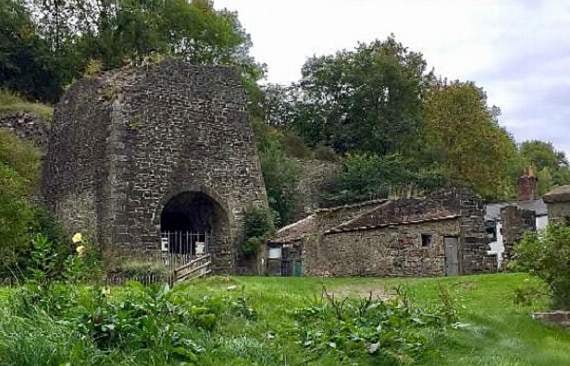
Its latest ‘At-Risk’ register includes 10 churches, Lydney docks, a blast furnace, a tithe barn, an iron works and a Roman villa’s remains.
But the 13th century All Saints’ Church in Newland – the ‘Cathedral of the Forest’ – has been taken off the endangered register after repairs to the tower were completed, part-funded by a £120,000 Heritage Lottery grant.
Buildings in a “very bad” condition include the 17th century Gunns Mill charcoal furnace in Littledean, St Saviours church in Redbrook, and St Peter and St Paul Church in Westbury-on-Severn.


But the report does say that the Westbury church has seen progress on restoring its 14th century landmark spire, after the award of a £250,000 Lottery grant to re-fix 35,000 wooden shingles and complete repairs.
The project has cost more than £800,000 and will have taken six years to complete when work is finally finished on the 160-ft-high tower next year.
‘At-risk’ buildings in a “poor” state include St Michael and All Angels and St Mary’s, both in Blaisdon, St John’s in Coleford, which closed in 2016, St Michael’s in Mitcheldean, Blakeney UR church, the 900-year-old St Mary’s in Dymock and St Bartholemew’s in Redmarley.
Also ranked ‘poor’ are Highleadon Court tithe barn and Lydney Docks and Harbour, while the condition of St Mary’s church in Upleadon has improved to “fair”.
A partnership group through the Forest Council is working to regenerate the 200-year-old docks, but the 16th century tithe barn is being used for storage and is deteriorating.
Historic England says scheduled monuments Whitecliff Iron Works, Woolaston Roman villa, Huntley castle motte and five sections of Offa’s Dyke trail are also at risk.
The 220-year-old Whitecliff Iron Works, which was rebuilt by Forest industrialist David Mushet between 1808-1810, is deteriorating badly, it says, while the grassland Roman villa site is at risk of being ploughed to destruction.
The iron works and the Gunns Mill furnace are both owned by the Forest of Dean Building Preservation Trust (FDBPT) and are deemed to be of “national importance.”
A Heritage Lottery application to save the latter was rejected this year, but the group is making a fresh application for funding to restore the site, which is decribed as being in a “perilous condition.”
FDBPT vice-chair Kate Biggs, a conservation officer with Gloucester City Council, said that despite HE’s listing, things were looking “positive” for both structures.
“The big stack of the iron works blast furnace is safe after a lot of work over the last 10 years, including paving and railings, and we’re gradually doing work to the cottages and ancillary structures,” she said.
“I’d say the preservation is pretty much complete.
“We’ve done stabilasation works at Gunns Mill and some maintenance while doing feasibility studies.
“And we’re planning a new Lottery bid to do some phased works.
“The ‘At-Risk’ register serves a good purpose by focusing communities on what needs to be saved, but overall I think we’re more positive than we’ve ever been about Gunns Mill.”
To see the ‘At Risk’ register, go to historic england.org.uk
Comments
This article has no comments yet. Be the first to leave a comment.