
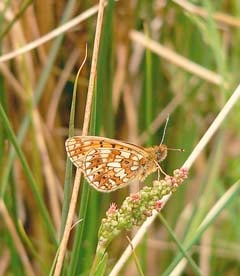
A RARE forest butterfly which is just about 'hanging on' in the Dean is to be given a boost with plans to try and restore and then widen its habitat.
The Small Pearl-bordered Fritillary was once found in more than 40 sites around the Forest, but has gone into steep decline since the 1980's. Studies carried out by the Midland Fritillary Project discovered there are now only three or four colonies left.
Nick Williams of the Fritillary Project (part of Butterfly Conservation) says a training day in Coleford led to a team of volunteers carrying out a "magnificent total of 25 detailed habitat assessments" in the Spring, followed by timed counts of the butterfly's flight.
"This has helped us find out a lot more about its status in the Dean. Where is it still found? How far does it fly from where it emerges? What is the preferred larval foodplant? What can be done to maintain its habitat and restore it where it has declined?"


It emerged during the year that the three main sites left for the fritillary are around Cinderford Linear Park, a long ditch in Moseley Green and at Gorsty Knoll, Milkwall.
The butterfly thrives in bracken rides where its favourite food, marsh or dog violets bloom. It flies low, with a burst of rapid wing beats followed by a short glide. But at this time of year, the butterflies have gone, their larvae overwintering in the bracken mulch.
Nick explains that the next step in the project is for the Dean Green Team to continue restoring breeding habitat by clearing scrub and then moving to set up new sites.
"We'll bring in violet seeds for germination, then we'll look at planting them out to increase and spread the marsh violet habitats to other suitable ditches and ponds around the Dean. Hopefully this will mean the butterfly can spread to fresh sites."
Gloucestershire Wildlife Trust will host a talk on how the Forest of Dean can be improved as a butterfly habitat at the Catholic Church Hall, Cinder Hill, Coleford at 7.30pm on 20 November. Details from Philip Mugridge, Dean: 510384.
Comments
This article has no comments yet. Be the first to leave a comment.