Adam Turley returns to the family's Coalway cottage with the farmer's daughter, Catrin, he has married while working as a miner in Wales. He has been told by his brother George that the Park End Royal pit is taking on buttymen, and the pair are given a stall by pit manager Arthur Gunter.
Billy Dobbs is their day man. His two younger brothers Jack and Tom are the hodders carrying the coal from the face to the horse-pulled trams.
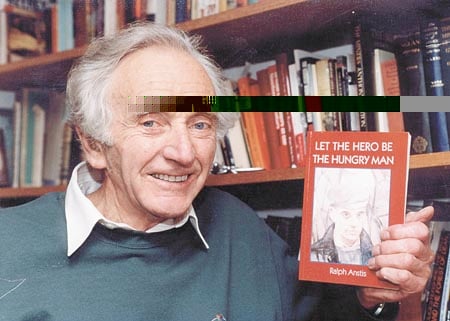
In his first full novel, Let the Hero be the Hungry Man (Albion House, £7.95), historian Ralph Anstis depicts the harsh realities of the miners' life in the 1870s. The youngster Tom is under the lawful working age of 12, but as the manager says, "who you employ is up to you."
Catrin is shocked by Adam's stench of sweat when he returns at the end of his first shift, and the scabs of coaldust embedded in his back when he takes his bath in the tub in front of the fire. She is settling in uneasily with her mother-in-law, Emma, and Adam's grandfather Cornelius – his father having died in a tinplate works accident.




On the Friday night at the end of the week, George and Adam sortie out to Coalway's Old Albion beerhouse. It is today the house that Ralph and Bess Anstis themselves live in since they moved from Parkend a few years ago.
Hardly surprisingly, in view of Ralph's previous portraits of Forest coal – and iron-masters – and their jointly edited Diary of a Working Man 1872-73, his documentary detail is precise and evocative. Having described the 1926 general strike and lockout in his previous book Blood on Coal, Ralph's story this time is of earlier strikes and lockouts of the 1870s.
At a meeting of colliers in Cinderford's Upper Bilson pub, the bearded and chapel-preaching Joseph Cowmeadow suggests they form a local lodge and a trade union for all the Forest's 5,000 colliers. Adam is inspired to form a Park End lodge, and becomes Cowmeadow's deputy organiser of the new union branch.
The miners' tale is paralleled by that of the mine-owners, notably the Park End Royal owner James Scully. He and others – historical figures such as Trafalgar colliery owner William Brain – impose a savage cut in wages which provokes a Forest-wide strike.
The most powerful of the owners, Henry Crawshay, does not initially follow suit. Scenes set in his Oaklands Park mansion outside Newnham depict Sully's wife Hermione seeking to marry off their daughter Alice to a Crawshay younger son, and Sully himself seeking to form a proprietors' association.
The book intertwines the personal affairs of the protagonists with the strike saga. Illicit love affairs in furtive circumstances produce deep tensions amid the otherwise close-knit community – and among the gentry as well. The climax, which Adam fatefully sets in train, brings a twofold family tragedy.
This carefully-crafted and convincingly written novel is full of delightful cameos, such as the first-ever miners' gala at the Speech House or a meeting of the coal-owners in Lydney's Feathers Hotel. (One quibbles, though, at the ponderous title – maybe a gesture towards the classic working class novel, The Ragged Trousered Philanthropists).
If, as Ralph threatens, this is his last book it is a worthy conclusion to an astonishing post-retirement writing career. Inspired by what he and Bess (a Local History Society stalwart) discovered when they moved to the Forest, his first book (recently reissued in a much-enlarged edition) was The Story of Parkend (Lightmoor, £9.95).
After half a dozen important (and immensely readable) biographical volumes, he has come full circle. It is unlikely that anyone in future will be able to rival the pioneering output of the Forest's trio of pre-eminent historians – Nicholls, Hart and Anstis.