
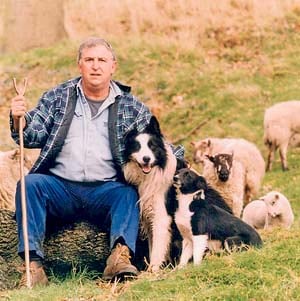
A FLOCK of 27 sheep impounded in a "secret" location near Coleford has vanished off the face of the earth. The lock to the field in which they had been contained was cut.
This week their owner, Bream milkman Jeremy Awdry, denied any part in recovering the animals. They had been impounded by the Forestry Commission after being found roaming, allegedly out of bounds, near the village school.
Mr Awdry told the Review he knew immediately he heard the sheep had gone missing he would be blamed.
He said: "It is nothing whatsoever to do with me. They had been lifted from Bream, impounded, and then released before I even knew they had been moved."

.png?width=209&height=140&crop=209:145,smart&quality=75)


Mr Awdry said he was at the Forestry Commission's headquarters in Coleford with the money – £15 a head – to pay for the sheep to be released from the field at Christchurch when he was told they had vanished.
"This is the latest in a long running dispute. To be honest I'm sick and tired of the hassle. They don't want the tradition to continue and I am being bullied and harassed.
"They have lost the sheep and what happens next is up to them. This time I'm just going to sit on the fence and wait to see what happens," he said.
Mr Awdry's free-ranging flock was one of three recently impounded by the Commission. A flock of 29 were lifted from Yorkley and 16 from The Pludds.
The Yorkley and Pludds sheep were owned by members of The Commoners' Association and resulted in an urgent plea from Association secretary Mick Holder to members urging them to make sure their animals were correctly marked to make their ownership easily known.
A special meeting of the Commoners is to be held at Mr Holder's home near Littledean this Saturday (4pm) to discuss increasing concerns that the ancient commoning tradition is under threat as never before.
"We have serious concerns. Very obviously things appear to have become unbalanced. I have expressed our worries in a letter to the Sheep Liaison Group and at this stage I do not want to make the content of that letter public," he said.
However, he said, there were now real fears the aim was to impede commoning in every possible way, eventually making it unsustainable.
Jim Sauter, the Forestry Commission's operations manager, said he believed commoning to be alive and well and to have a future. The Commoners' Association, he said, were in active discussions over using sheep to improve conservation habitat in the centre of the Forest.
He added that the disappearance of the sheep was now a police matter. If necessary a security guard would in future be used at the pound, the cost of which would fall on those who had animals impounded.
Comments
This article has no comments yet. Be the first to leave a comment.