

Gardening trends for 2026 have been predicted in a Garden Media Group trends report. It all makes me cringe a bit as I am not really a fan – or even believer – in trends, as most of them seem to be devised by people in an office, where the pen is mightier than the spade.
Anyway, I thought I’d share them. The buzzword in gardening for 2026 is ‘lemonading’. In the report ‘lemonading’ is described as gardening with resilience, creativity and optimism. It’s about celebrating unexpected outcomes instead of trying to control every detail. Apparently, ‘lemonading’ equates to asking ‘What can I do now?’ when things go wrong. It also involves being enthused by a wilting plant, a patch of weeds and a buddleia growing in the paving as they all give you a chance to ‘try something else’.
The report describes it as, ‘treating mistakes as experiments and letting your garden evolve with personality.’
It is our younger gardeners that are driving this trend forward as they embrace ‘chaos gardening’. That involves things like scattering a handful of seeds ‘willy-nilly’, to see what comes up and letting moss and clover crowd out grass in lawned areas.


Interestingly, I may have been ahead of the curve here as a couple of years ago I shared the fact that I mixed up lots of different seeds from old unopened seed packets and sowed them in raised bed to see what would emerge. It was a ‘mild success’ insofaras I had an interesting display and some unexpected food, but it was born out of hating waste not wanting to set a trend.
Design-wise, the Garden Trend Report also predicts increased interest in Bento Box Design and 'bark'itecture. Known as the Botanical Bento concept, this theme follows the principles of a Japanese bento box, and involves incorporating decorative landscaping elements, such as low walls, hedges, pergolas, or paving, to create distinct zones. These zones, or ‘rooms’, offer a different theme, function and aesthetic options.
I just want to whisper quietly – ‘it’s been done’, in my garden designer days a lot of ‘my’ gardens were laid out in this way. It makes a garden feel bigger, and provides individual areas for a greater usage.
In ‘other trends’, The Royal Horticultural Society are predicting less flower-power and more table-top vegetables, as people try to ease the cost of living crisis. I don’t want to be a party pooper, but I always recall Stephen Fry telling me that when he first started growing tomatoes, each one cost him over a fiver.
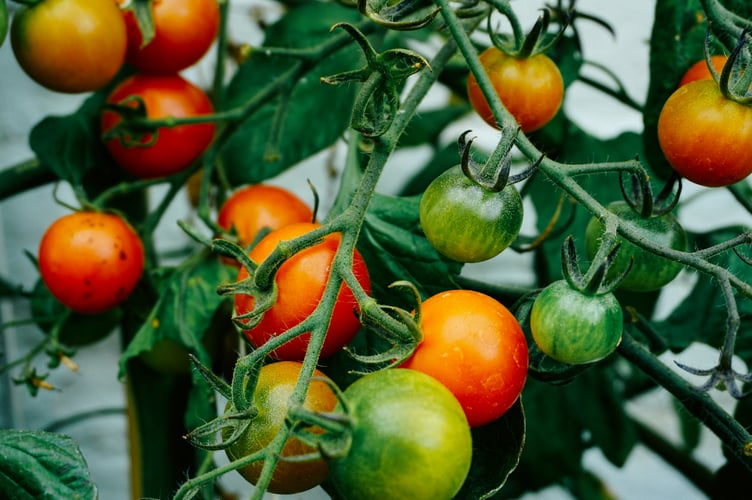
As well as tomatoes, popular choices will include table-top chillies, compact aubergines, hanging basket cucumbers and even 50cm grape vines.
Not surprisingly, gardeners are predicted to keep leaning toward plants that will tolerate the extreme weather conditions, be it drought or flooding. Roses and bulbs top this list with bulbs being layered – in beds and borders as well as containers – which is now called Lasagne Planting. Our menopausal weather will mean that indoor plants will tolerate being outdoors – and renamed ‘In and Out plants’ - with indoor varieties such as spider plants and tradescantia making their way into outdoor summer displays.
Garden storage is now another opportunity to encourage sustainability, as solar-powered garden sheds with rainwater harvesting systems become more accessible. As the cost of manufacturing drops, it is a clever way to water plants and power garden lights.
And of course there are some other hi-tech solutions too, with AI-enabled water butts that self-empty based on the weather forecast currently being trialled. If successful, expect to see them on the Gardening Trend List for 2027.
Comments
This article has no comments yet. Be the first to leave a comment.