
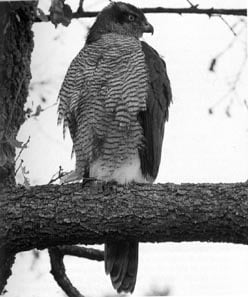
GOSHAWKS have staged a major population boom in the Forest of Dean and have now reached sufficient numbers to seem assured of a permanent place.
"The beauty is they have done it all by themselves," said Forest Enterprise spokesperson Val Long. "We have not had to bring in any more since their original introduction.
"They are now well distributed, although they are very territorial and each bird has a large hunting area.
"We have actually had to adjust our working methods to take account of them. For instance, we do not fell trees anywhere near nesting sites."

.jpeg?width=209&height=140&crop=209:145,smart&quality=75)


The Gloucestershire Wildlife Trust also confirms the widespread distribution of the large birds of prey.
"They are rarely seen but there are enough of them now for us not to worry about their future," said Sarah Killingback, who writes a regular wildlife column for the Review.
Although goshawks could be confused with buzzards, which are also now widespread in the area, they have different habits. While buzzards soar above the forest and fields to spy out carrion and small prey, goshawks slip silently through the woods beneath the canopy to hunt.
They can take prey as large as squirrels but also eat fledglings of other birds such as crows.
However, hopes that a sufficiently large population of goshawks might start to bring down the huge numbers of grey squirrels in the Forest have proved unlikely.
"We still have huge numbers of grey squirrels and they continue to cause havoc, particularly in young plantations," said Mrs Long.
Poisoning and trapping remained the major methods of control.