

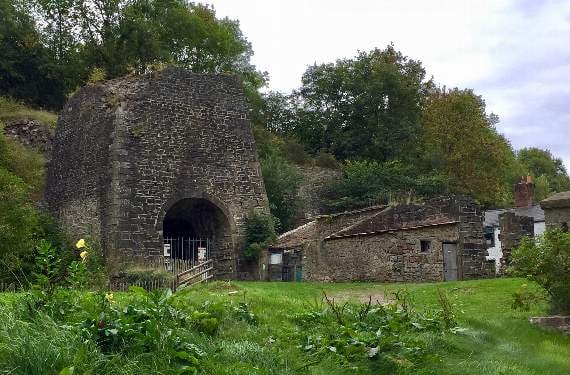
A BID to build two new semi-detached homes opposite an historic ironworks has been rejected by planners.
The scheme to replace derelict industrial units across the road from the Whitecliff Ironworks scheduled ancient monument in Coleford was turned down on the gounds that it would lead to cramped development in a rural historic setting.
The Rambers Association also complanied that it would see vehicles accessing parking spaces by driving on a public footpath.
The ironworks constructed in 1798 were rebuilt by famous Forest industrialist David Mushet between 1808 and 1810 and are considered to be of “national importance”.



Conservation adviser David Haigh told Forest Council planners: “The landscape here is an important one in terms of its industrial archaeology.
“Opposite the site are the extensive and nationally important industrial remains of the Whitecliff Ironworks which was an important, but short-lived early 19th century ironworking site.
“This is a scheduled Ancient Monument and the development opposite this site will affect its setting.”
He added: “The area is currently a predominantly rural one with the industrial archaeology contributing to the significance of this largely rural landscape.”
Conservation body Historic England did not agree that the plan would impact on the significance of the monument, with the new buildings set back from the road.
But it said: “The site has been identified as of national importance due to its associations with the Mushet family and the well preserved evidence of early coke-fired iron working.”
Jeff Wheeler, Gloucestershire Council public rights of way inspector, said the ‘unnamed lane’ put forward by the applicant, London-based developer RFDV Ltd, to access proposed parking spaces beside the redundant R&D Pressings site was a public footpath.
“A public footpath is for walkers only and not vehicular traffic of any description. As a result, permission should not be granted,” he said.
The overgrown industrial workshops proposed for demolition haven’t been used since the 1990s.
But Forest planning officer Anna Welsh said the scale and design of the proposed development “would create harm to the rural historic setting.”
The three to four-bedroom homes were “substantial in scale” on a “cramped site” with too little space for gardens, she added.
Comments
This article has no comments yet. Be the first to leave a comment.