
This is the time to start learning bird song. We think of spring as the time when birds start singing but it is surprising how many birds sing all through the winter. In fact the only really quiet time for birds is mid to late summer when they are going through their annual moult.
On a fine morning, even if it is cold and frosty, there is a dawn chorus to be heard and it is nearly all robins. During the winter both male and female robins sing to guard their winter territories and amongst small birds they are one of the earliest to rise and one of the latest to go to roost.
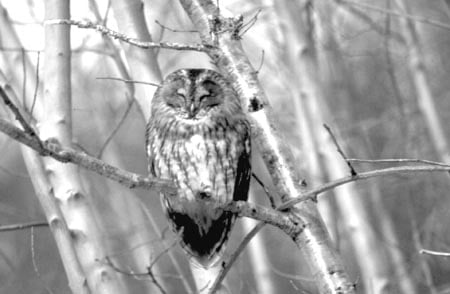
By the time robins do go to roost tawny owls are coming out to hunt and they too sing in the winter. Anyone who has been walking or cycling home from work at dusk in the last few weeks may well have heard their familiar long drawn out hoot. Where your hear tawny owls hooting is probably close to where they are going to start nesting in the next few weeks. Plotting where they are singing is a good way of counting how many pairs there are in the area.
The same applies to the early nesting mistle thrush. Their wild, piping song has been sounding over the woods for a couple of months now. Even in rough weather they will sing from a high, exposed perch, a habit that has earned them the name of storm-cocks. They are a species that needs monitoring as nationally their numbers seem to be declining.



Another thrush singing now is the song thrush but they tend to leave the central parts of the Forest during the winter (it is known that some of our song thrushes winter in France) and you are more likely to hear them in more sheltered places down in the Wye Valley or Severn Vale. Song thrushes are great mimics and will regularly include other birds' sounds in their own songs. Curlews are frequently imitated and once when I was listening to a song thrush a goshawk called nearby. The thrush immediately incorporated the goshawk's chatter into its own song!
The other great mimic amongst resident winter songsters is the starling. Nothing is certain to escape its quick copying, even the mobile phone is included in its repertoire. Starlings do not sing to establish territory and they are just as likely to be heard singing in a group as by themselves. Sitting together in a tree top or a high hedge they will chuckle away together in the weak sunshine of a winter's afternoon.
Redwings and siskins are also communal singers. They are mostly winter visitors to the Forest and frequently sing in flocks during the winter, not the full song that they will use in the spring but an intimate sounding, conversational sub-song. I have recently heard siskins singing from stands of red cedar in Flaxley woods and near Coalway but they might be heard anywhere, especially near alders in which they love to feed.
So the dead of winter is the time to start learning bird song. You can hardly go out in the woods without hearing great tits, coal tits, nuthatches and wood pigeons. In gardens the cooing of the collared dove, the loud blast of the wren and the musical twiddling of the dunnock can be heard daily. On the brooks at Soudley and Cannop dippers bubble away like the stream itself. In winter, with the trees bare, you can actually see the singing birds and before the summer migrants arrive you can get to know our local birds whose sounds brighten the dullest winter day.