
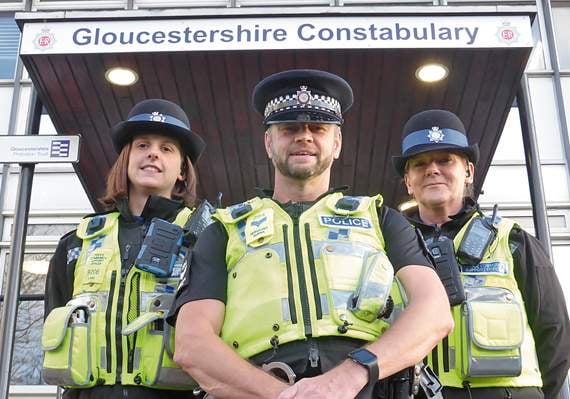
A NEW approach to neighbourhood policing will see more bobbies out on the beat connecting with the local community.
As from February 18, 13 PCSOs will become the dedicated face of the force for Forest neighbourhoods, each assigned a set area, backed by up to eight PCs, two sergeants and an inspector.
This follows Gloucestershire Police and Crime Commissioner Martin Surl’s pledge to make neighbourhood policing a force priority.
Key to the fresh approach, which is being launched with two weeks of high profile public engagement events, will be identifying local concerns and taking action to address them.


.jpeg?width=209&height=140&crop=209:145,smart&quality=75)

Inspector Andrew Hodgetts said: “We shall be engaging with the community wherever possible with regular street patrols in all the main centres and keep them safe by delivering a bespoke policing service for the Forest of Dean.
“The force has previously admitted that it has not focused on neighbourhood policing for some time, however I am fully behind this initiative and believe it is something that local people will welcome.
“It’s about being more efficient over the way we engage with our community. This scheme is effectively putting bobbies back on the beat.
“It’s what people have been wanting for a long time,” he added, “It’s not just about pulling together, it’s about engagement and letting the scheme evolve. We don’t expect to get things right straight away, but I’m hoping that with the help of Forest people we can soon have valuable neighbourhood policing lasting well into the future.”
Sgt Mark Burns, who is based at the force’s Coleford police station, said: “I think it’s fair to say that perhaps the force had lost its way a little, so this is a refocusing of our commitment to neighbourhood policing.
“Our main role is safeguarding, making sure the vulnerable are looked after. And while other forms of policing are important, such as responding to 999 incidents, that shouldn’t be at the detriment of neighbourhood policing. So we’ve moved staff around to make sure we have the right numbers.
“We’re the first port of call for the community, and we’ll be going out on foot patrol a lot more, so people can talk to us.
“We’ve received a bit of investment and we’ll have more dedicated specialist neighbourhood officers, rather than being used to bolster other areas of policing.
“We’ll be out there liaising with local communities and finding out what their priorities are, such as speeding, concerns about burglary, anti-social behaviour, drugs. And when they are highlighted, we’ll be looking to take action.
“By being out there and getting known, people are far more likely to talk to us, so we can address any problems.
“All links, contacts and intelligence come from neighbourhood policing – we really need that connection with the public. And when it’s working effectively, hopefully we’ll see the demand for 999 responses greatly reduced. We aim to be out there stopping issues escalating, as prevention is always better than cure.”
As well as the dedicated neighbourhood PCSOs, each area team will include other officers who will work on a wide range of issues, such as tackling drugs networks and organised crime groups, and tracking down paedophiles.
Chief Constable Rod Hansen said: “The officers will not be patrolling without a purpose. I expect them to know their neighbourhood and the people living in it.
“That means being at the school gate to talk to parents; it means going into care homes and sheltered houses to talk to residents about the issues that are concerning them; it means attending the events that matter; and it means listening to what you are saying.”
At the coal face will be the likes of PCSOs Sue Pritchard and Nat Lang.
PCSO Pritchard, who will be based in Cinderford, said: “Through public events and initiatives, we’ll be getting our role across, what we’re about, what we’re doing and what we’ve done in the community.
“For instance, as part of the Aston Project last week, I took some youngsters aged nine to 15 out to help with speed checks and to learn about road safety.
“As part of it, they get to tell the drivers off about speeding, which can be very effective. They help deliver the message to drivers we stop about the possible consequences of their fast driving, and the kids are very passionate about helping us in their hi-vis jackets.
“It’s part of a project package which is getting the message out to the community, by alerting them that we’re there.
“We’re already getting members of the community coming out and training to use speed cameras as well, which provides us with great information on identifying where there may be a speeding problem and at what times.
“We can’t be there every day, but if we work together and then have the info, we can target problems and use our resources more effectively.
“The info is fed back to us, and if we identify regular offenders, we can either send them a letter or visit them at home to warn them about their conduct.”
PCSO Lang, who will be covering the Tidenham area, added: “By being assigned our own areas, we can develop strong links with the local community, groups and councils.
“We’re already out there doing a lot of crime prevention advice, and we’ll be speaking to more people about what they can do to protect themselves and keep their property secure, as well as getting the neighbourhood engagement vehicles down and holding events.”
Sgt Burns also flagged up the junior wardens scheme, where primary aged children will be taken around the community and shown what the police are doing and how they make a difference.
He added: “They also get to talk to speeding drivers about the potential consequences, and it makes a real difference coming from a six or seven year old. We’ve had some drivers crying, saying “I’ve got children, I didn’t know I was driving so fast, I’ll drive more carefully now.”
They’ll also be pushing out Neighbourhood Alert, the electronic contact system, which you can sign up with online via Gloucestershire Constabulary, and delivering a package to secondary schools about the dangers of ‘sexting’ and ‘sextortion’.
PCC Mr Surl said: “Engaging with the communities they serve is absolutely crucial if the police are to achieve their number one task of protecting the public.
“The bond between police and public is what makes policing in the UK different from anywhere else in the world. And whilst there is no doubt seven years of austerity has undermined that relationship, I am pleased that the Constabulary is focussing on it more.”
Comments
This article has no comments yet. Be the first to leave a comment.