
A PAIR of First World War medals dug up in a Forest garden were among the wide variety of exhibits on display at a heritage and memorial weekend.
The event at Ruspidge Memorial Hall marks the 100th anniversary of the end of the conflict, and was dedicated to the memory of the 25 men from the district who died in the Great War, the 10 who lost their lives in the Second World War and one who fell during the Falklands Islands conflict in 1982.
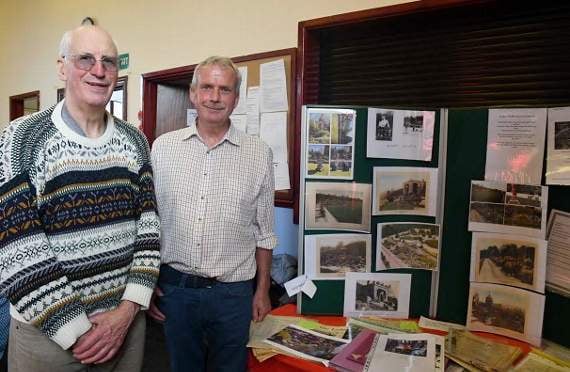
As well as the wars, many aspects of local life were represented in the exhibition, including the Eastern United colliery, the village carnival, local businesses and East Dean Grammar School.
The whole of the lower floor at the hall was given over to an exhibition of art created by pupils of St White’s Primary School inspired by the 1914 to 1918 war.




It featured dozens of poppies as well as paintings, models and signs made by the children.
Event organiser Brenda Evans said: “It’s a wonderful exhibition of work by the children. They have worked really hard.”
According to the names on the rims of the medals, they were awarded to Gunner R Lamb of the Royal Artillery and Private TE Embling.
Neither of the names appears on the list of war dead which is maintained by the Commonwealth War Graves Commission.
The names are being researched by a member of the British Legion with the intention of returning them to their families.
There were also pictures of the gardens created by Albert Worsfold in the 1940s and 1950s at 52, Ruspidge Road.
They attracted thousands of visitors a year and became so famous that Pathé News filmed a newsreel about them.
The memorial hall, in Ruspidge Road, was built in 1923 on land donated by Alice Hudson whose only son, Campbell, was killed in October 1917, aged 31, serving with Machine Gun Corps.
He is remembered on the Tyne Cot Memorial in Belgium which lists the name of some 35,000 men who have no known grave.
Brenda said: “It has been very good, we have had a steady stream of people through.”
Poppies dedicated to each serviceman surrounded the albums of information and villagers have produced more of the iconic emblem which will remain in the entrance to the hall until Armistice Day in November.
Comments
This article has no comments yet. Be the first to leave a comment.