

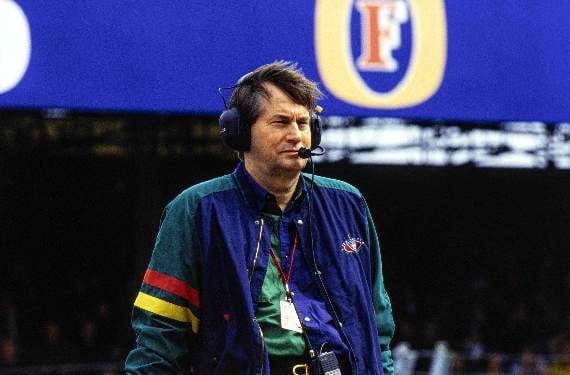
TRIBUTES have been paid to a Wye Valley motorsport engineer who numbered race ace Niki Lauda among those he helped, and included Grand Prix and Indy 500 wins in his long career.
Robin Herd CBE, who grew up in Ross-on-Wye and went to Monmouth School before securing a double first in Physics and Engineering at Oxford, designed McLaren’s first ever Formula One car having previously worked on the Concorde project.
The Old Monmothian, who turned down a cricket contract with Worcestershire to pursue engineering, joined the Royal Aircraft Establishment in 1961 to work on Concorde before he was recruited by Bruce McLaren in 1965, having been alerted to an engineering vacancy with the constructor by former school friend and racing driver Alan Rees.
“I was only 24, and to be told we’ve got to have this car on the grid at Monaco next year when I hadn’t actually designed anything other than engineering exercises, showed an extraordinary degree of faith or stupidity on Bruce’s part, and a similar arrogance or stupidity on mine. But I wanted to do it so much I wasn’t going to let anything stand in my way,” he said.

Robin stayed with McLaren until 1968 — during which time he designed their M4B, M5A and M7 cars, as well as the successful M6A Can-Am before moving to Cosworth, where he carried out work for Frank Williams in 1969 to modify one of his cars.
He came close to joining forces with Bernie Ecclestone and Jochen Rindt to form an F1 team, but instead hooked up with fellow Oxford graduate Max Mosley, Alan Rees and Graham Coaker to co-found Bicester-based March Engineering in 1969.
March produced cars saw quick success, with the likes of Jackie Stewart winning the second F1 race of 1970 season, and Ronnie Peterson taking second overall in the 1971 world championship in the ‘Spitfire’, before Lauda, who died last month, joined Peterson the following year in March’s 721X factory cars.
James Hunt also raced in March cars at F2 and F3 levels, while the March team itself went on to complete 207 F1 Grand Prix races between 1970 and 1992, winning three races and achieving four pole positions.
Its first win came in 1975, when Vittorio Brambilla took victory in the rain-shortened Austrian GP.
They enjoyed a great deal of success in Formula Two and, in the 1980s, they made a foray into Indycars, with March cars winning the Indianapolis 500 for five successive years from 1983 to 1987.
Robin sold March Racing to the Japanese property company Leyton House in 1989 and created Robin Herd Ltd.
His career then took a sporting turn in 1995, branching into football by buying Oxford United, where he spent three years as its chairman.
He also founded a company investigating natural ways of producing energy and formed an Indy Racing League team called March Indy International in 1999.
At the news of his passing after a long battle with cancer, his first racing team posted: “All at McLaren are deeply saddened to hear the news of Robin Herd’s passing. Robin designed our first ever F1 car and was an integral member of the team in our early years. He will be missed.”
US Indy car star Michael Andretti tweeted: “So sorry to hear the passing of Robin Herd. Was lucky enough to work with him in my early years of Indycars driving the MARCH. He called everyone “Sunshine”. Prayers to his family.”
Comments
This article has no comments yet. Be the first to leave a comment.