

A proposed 3,500-home town in the Forest of Dean would “flood” the Malvern Hills with a “dome of orange haze” visible for miles at night, a light pollution expert has warned.
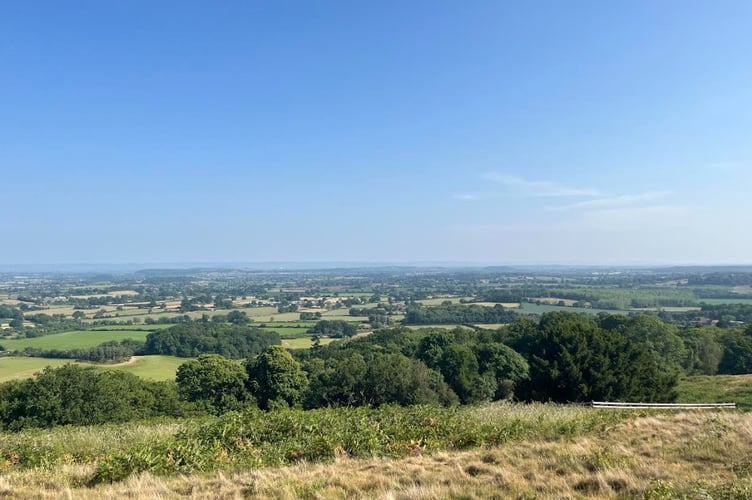
Glynchbrook, the name given by Forest of Dean District Council to the development, would be built on land between the M50 and A417, bordering the Malvern Hills and the villages of Redmarley and Lowbands.
The council has been instructed by the Government to identify land for 13,200 new homes over the next 20 years, and Glynchbrook is one of several potential sites.
However, the proposal has sparked strong opposition locally. The authority’s own assessment warns the site is at risk of regular flooding, could cause “landscape harm”, and is “poorly located for low-carbon access to services”.



Light pollution expert Ben Gamble has now raised concerns about the scheme’s impact on Castlemorton Common, an “incredibly rare” dark-sky site just 2.9 miles away.
“A development of 3,500 homes, plus streets, shops, schools and constant vehicle movement, would flood the area with upward light and skyglow,” said Mr Gamble, who hosts the Astro Ben podcast.
“Even with the best modern LED fittings, the sheer volume of new light sources creates a dome of orange haze that travels for miles. The Malvern Hills AONB’s own lighting guidance warns that once dark skies are lost, they are almost impossible to regain.
“This development would effectively write off one of the last good stargazing sites left in the Midlands.”
Mr Gamble also warned that increased lighting would have serious consequences for wildlife.
“Nocturnal animals – bats, moths, owls, hedgehogs – rely on true darkness to hunt, navigate and breed. Artificial light throws whole ecosystems out of sync,” he said.
“Light pollution is now recognised as a form of pollution under the Environment Act and national planning guidance. Councils already assess air, noise and water pollution – light should be no different.
“Ignoring it isn’t just short‑sighted; it’s legally and morally indefensible when other sites with lower environmental impact are available.”
Residents in nearby villages said they feared irreversible damage to one of the area’s defining features.
Linden Partridge, 60, from Redmarley, said: “I’ve grown up near the Malvern Hills. The dark sky at night is breathtaking and a rare and precious commodity.
“Building thousands of homes at the foot of an area of outstanding natural beauty would be a tragedy – an act of vandalism on the environment.
“We all know homes are needed, but they cannot come at the expense of our most prized green spaces when there are more sustainable options.”
Alex Girling, 58, a retired teacher from Lowbands, added: “In the daytime the hills offer spectacular views. At night, they’re lit up by thousands of stars.
“If you build a new town on the edge of the Malvern Hills, it won’t be a rural oasis anymore – just another hill next to an anonymous town.”
Find out about planning applications that affect you by visiting the Public Notice Portal.
Councillors will now consider evidence submitted during the recent public consultation on the local plan before deciding whether it will be adopted.
Comments
This article has no comments yet. Be the first to leave a comment.