
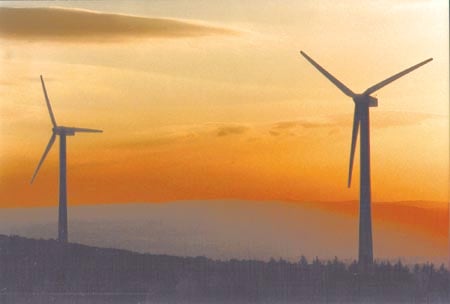
UP to four wind turbines on the canal bank and a biomass generation station on the industrial estate with willow farms to feed it are set to make Lydney one of 100 EU 'showcase' towns for renewable energy.
A current investigation is under way funded by £1,000 each from three partners involved in the development of the Dock area.
Its aim is to make the town entirely self-sufficient in energy, and as one of the proven best sites for wind generators in the entire county it would be well able to achieve this.
The report, commissioned from the Severn and Wye Energy Agency, should be made public as early as this month, said Environment Agency environmental planning manager Roger Wade.


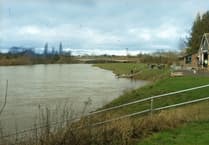
"We would then hope to ask local people what they think about the scheme," said Mr Wade, who added that desperate problems with the flooded Sandhurst chemical treatment plant had delayed his side of presenting the subject to local authorities.
Graham Ayling, who heads the Severn and Wye Energy Agency based in Coleford, said a draft public consultation document was sent to the project partners this week and he expected the finished paper to be ready soon.
"The important thing is to find out what local people think of it first. There are are big benefits not just for the people of Lydney but for the area as a whole," he said.
The scheme could see:
•Four large wind turbines or nine smaller ones on the canal embankment.
•A biomass (wood and other growing material) generating station on Lydney Industrial Estate.
•A campaign to encourage nearby farmers to plant and harvest fast-growing willow for the biomass plant. Forest Enterprise and private woodlands might also be involved in fuel production.
•A small hydro-electric generating plant on the canal outfall.
Up and running the scheme could also turn in a profit by selling power outside town.
"This would tie in with keeping the docks in good order," said Mr Wade, who added that the town was an ideal candidate for the EU project to promote energy self-sufficiency through supporting pathfinder projects with funding.
"Obviously the implications are a lot wider than just producing electricity. It would be a big boost to the local economy too," he said.