

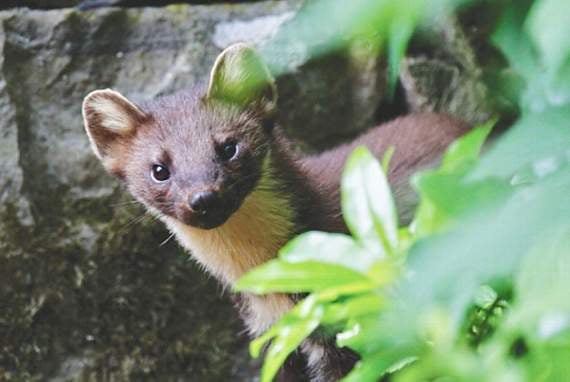
ONE of Britain’s rarest mammals – the pine marten – has secretly been reintroduced to the Forest of Dean after an absence of more than a century.
The mammal stood on the brink of extinction, but a concerted conservation project has seen the successful release of 18 pine martens here over the last two months.
Gloucestershire Wildlife Trust (GWT), Forestry England (FE), the Vincent Wildlife Trust (VWT) and Forest Research have worked together on the project, which saw the animals released in August and September after being relocated from Scotland.
The pine martens have been fitted with tracking collars to closely monitor their progress.




Extensive hunting and the loss of woodland resulted in their near extinction in England, as they became Britain’s second-rarest native carnivore.
Their only remaining stronghold until now was in the North-West Highlands of Scotland, but with their return to the Forest of Dean and parts of Wales, things are now looking up.
Rebecca Wilson, FE planning and environment manager in West England, said: “We are delighted to be involved with the return of the pine marten, a charming, but highly elusive mammal that was once widespread.
“As native omnivores, pine martens play a vital role in the delicate balance of woodland ecosystems.
“Living at low densities in the landscape, they forage on fruit, fungi and a range of prey including the grey squirrel, a non-native species which is having a detrimental impact on broadleaf woodland.
“We are looking forward to working with volunteers, local communities and partner organisations to monitor how the pine martens are moving throughout the Forest of Dean and the wider landscape.”
The longer-term aim of the project is to establish a source population to support the recovery of pine martens nationwide.
Pine martens were once common, but were last seen in Gloucestershire in 1915.
Similar in size to a domestic cat, with slim bodies, brown fur and a cream ‘bib’ on their throats, they have long, bushy tails and prominent rounded ears.
Dr Catherine McNicol, GWT conservation project manager, said: “Pine martens are elusive and shy, with their presence often only indicated by scats in the middle of forestry tracks. They only give birth to a few kits each year if breeding is even successful, so the rate of marten population recovery in the UK is low.
“It is hoped that their protection, alongside these reintroductions, will give them the boost they need to become resilient and thrive.”
The VWT was able to move 51 pine martens from Scotland to Wales between 2015 and 2017, where they now have an established population.
And over the next two years, more pine martens will be released into the Forest in the hope that they will spread and link up with the Welsh pine martens.
They are solitary mammals which have exclusive territories and avoid each other and people.
The Dean project has been made possible by Forest Holidays, with support by the Woodland Trust.
See www.gloucestershirewildlifetrust.co.uk for more information.
Comments
This article has no comments yet. Be the first to leave a comment.