

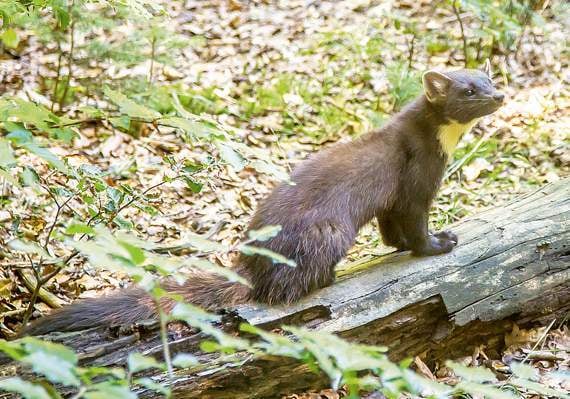
PLANS have been confirmed to reintroduce pine martens to the Forest of Dean. The first pairs could be on their way here by as early as September this year.
The scheme is a joint venture between Gloucestershire Wildlife Trust, Vincent Wildlife Trust and the Forestry Commission.
They plan to transfer pine martens from a healthy population in Scotland and the hope is that they will quickly establish themselves locally.
Once common in the Forest and Wye Valley, pine martens suffered at the hands of Victorian gamekeepers and were eventually wiped out in Gloucestershire around 1915.


They remain all but extinct in England with just a few small population pockets in remote areas.
Recently, a group of 51 martens were reintroduced to central Wales and appear to be thriving.
If the move to introduce the animals to the Forest is successful, it is hoped that, long-term, they will eventually support each other… if one population has a poor year, the other can supplement it.
“It would safeguard their future,” says a spokesman.
Experts hope that over the first three years between 40 and 60 pine martens will be reintroduced.
Wildlife enthusiasts are being asked to make donations towards the cost of providing up to 70 specially constructed den boxes offering warmth and safety.
A spokesman for the groups describes the Forest as as ideal location to make the plan a success.
But it was, he said, vital to have a September release so that pine martens could breed successfully next year.
“It’s a tight window, but we are confident we can make it. As long as we get the funds in time.
“Reintroducing a predator into the wild needs very special supervision.
“We’ll monitor them closely, particularly the impact they might have on the surrounding ecosystem.
“Pine martens can travel vast distances too; up to 10km in a single night.
“Some pine martens will have a radio-tracking collar fitted and be micro-chipped.
“Special cameras will be positioned in their habitat to watch over them, and 20 auto feeder stations will be installed to make sure they get all the food they need as they settle in.
To back the project, go to www.gloucestershirewildlifetrust.co.uk/node/12053
Comments
This article has no comments yet. Be the first to leave a comment.