
XEROX union chiefs are planning to meet company bosses next Monday to thrash out redundancy deals for the 1,300 employees who will lose their jobs at Mitcheldean over the next 12 months.
Staff at The Document Company are still in shock following last week's announcement that the company is to reduce its operating base in the Forest from 1,500 to between 150 and 250 workers.
The names and dates of when employees will go have still to be announced and officially the decision was still in "the consultation stage", a union official said.
Following a meeting with MP Diana Organ on Monday, a raft of actions will be undertaken involving government departments, including the Regional Development Agency, in a late bid to try and save some of the projected job losses.
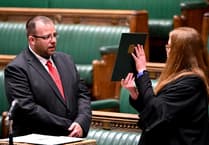



Mrs Organ is to urge the government to put extra resources into the Forest to improve the infrastructure, training and support available to businesses.
"I will be urging the South West Regional Development Agency to visit the area as soon as possible to assess our needs and put together a plan of action to boost the local economy,"she said.
South West MEP Dr Caroline Jackson visited the Forest last Friday to speak to students at the Royal Forest of Dean College and launched a stinging attack on the RDA.
Dr Jackson accused the agency of failing to push hard enough for the Forest to be given priority status for European money much of which went instead to Cornwall, parts of Devon and Bristol.
"Now, with the region run from Exeter, my impression is that the Regional Development Agency has a very strong focus on Cornwall and Devon, but shows much less interest elsewhere. Northern Gloucestershire and the Forest have much more in common with the Midlands or Wales than they do with Devon or Cornwall, and this is another problem that the Forest has now to overcome since the present government is committed to promoting the English regions with their present boundaries."
Dr Jackson said there was still some help available from Europe and she would do what she could to help.
"We must remember that all our disadvantaged areas will have to look after themselves without large European grants after 2006 because that will be going to help Eastern Europe. It is ironic that some of the jobs we are currently losing are actually going to Eastern Europe because labour is cheaper there," she said.