
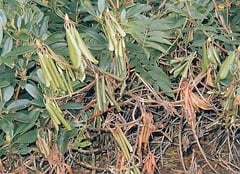
A NEW and more menacing form of Sudden Oak Death is spreading in the South West and raising concerns in the Forest of Dean, where a small outbreak at Lydney Park Estate is being tackled by experts.
Fungal Phytophthera ramorum, which is spore spread, has made an alarming species jump to larches after arriving in Britain a few years ago on infected rhododendron cuttings imported from the Continent.
Forest Deputy Surveyor Rob Guest said Forest Enterprise were concerned about the threat, particularly because of the rapid spread in the South West Peninsula and the Lydney Park outbreak, which he said was "small".
"We are keeping a close eye on things. So far as we know there are no affected trees in the Forest, although the larch trees at present have dropped all their needles so infection would be hard to spot.



"As it is a spore-spread disease there is very little we can do if it does arrive, but we would contain any outbreak and of course try to eradicate it."
At Lydney Park Estate head forester Brian Reece said he was working closely with Forestry Commission experts and hopefully the outbreak in rhododendrons had been contained and eliminated.
"It was spotted here about two years ago. We have now started a three year programme to clear all the scrub rhododendrons from about nine hectares of the Park to avoid future problems," he said.
He said this would not affect the garden displays of flowering rhododendrons which are a big part of the Park's attractions on open days.
Nationally there is fear that the new mutation of the disease will hit other species – besides larch and rhododendrons, it has hit some other types of firs, turkey oaks and red oaks. However beeches and birches growing beside affected rhododendrons have also been attacked by the fungus.
The Forestry Commission's plant pathology press officer told the Review that there was evidence in the New Forest that the disease had spread near paths and a ban on walking dogs without leads was being considered.
The disease, which is notifiable, has attacked garden shrubs and trees. The main symptoms are dying shoots and blackened leaves, while on trees lesions which weep black fluid appear on the trunk. The infected tree dies quite quickly once lesions become extensive.
Comments
This article has no comments yet. Be the first to leave a comment.