

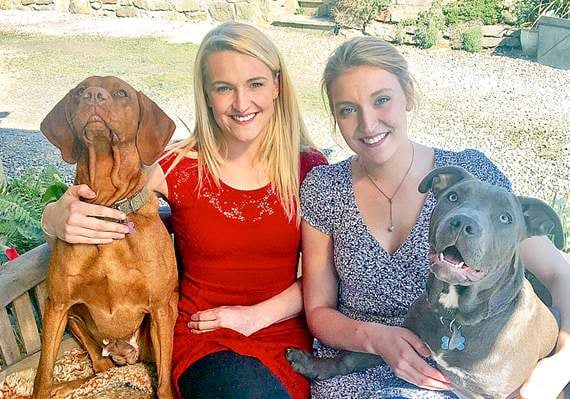
DOG owners are being urged to stay calm but vigilant, as two local vets have reported suspected cases of a deadly canine disease and a Longhope dog battles for her life.
Hungarian Viszla Rosie, owned by Liza Bond who runs Old Farm Cattery in Longhope, is currently battling against an illness Liza describes as ‘almost certainly Alabama rot’, that causes painful lesions and kidney failure.
Liza told the Review: “We took Rosie to the Chase View vets with two penny-sized sores on her legs on Thursday (January 18). She is now fighting for her life at a specialist referral vets near Stroud and we’ve been told that the vet is as certain as she can be that this is Alabama rot.
“Rosie went into renal failure yesterday and her chances of pulling through are now less than 10 per cent.



“My husband ran her through May Hill Woods 48 hours before she developed symptoms and we’ve been told the other dog that is believed to have died of it had also been walked there.”
Kate Kerry of Chase View practice said: “We’ve had two suspected cases of Alabama rot recently from dogs in the Longhope and May Hill area. This disease is just one of the possibilities for these dogs.
“One dog is still very poorly and undergoing treatment, but the other sadly passed away at the weekend. Confirmation of the disease can only be made with an autopsy, but that’s not what the owner wanted in this case.
“The disease may be seasonal, as more cases appear between November and March, but the causes are still unknown.
“The social media hype around it is out of all proportion to the actual risk and the worry it’s causing isn’t fair and isn’t based on fact. It’s very frustrating.”
Rosalind Wadsworth, senior vet at Pets Barn practice, has confirmed that a dog at their Longhope surgery has been sent for post-mortem testing for the deadly disease.
Cutaneous and renal glomerular vasculopathy (CRGV), commonly known as Alabama rot, is a disease caused by damage to blood vessels of the skin and kidneys and is fatal in up to 80 per cent of suspected cases.
Rosalind added: “We’d urge people not to worry as this disease is very, very rare. Be vigilant with animals if they’ve cut themselves. Clean wounds with a veterinary wash and seek advice from a vet. There is evidence that it responds to antibiotics, so a topical treatment may help.”
Mark Hinds, a vet at Severnside Veterinary Group in Lydney, contacted the Review to offer this advice to concerned dog owners: “Don’t panic. Only 100 cases of Alabama rot have been confirmed in the UK in the last five years. Your dog is more likely to be bitten by an adder or savaged by a boar than it is to catch this disease. It is understandable to be concerned, however.
“Early symptoms of the disease include skin lesions, but hardly a day goes by without us seeing a dog with these. They are caused by all manner of things and highly unlikely to be Alabama rot. If you are worried, we would suggest you visit your vet to get the problem checked out.
“Keep an eye on local press reports and if cases are confirmed, avoid walking your dog in these areas as the disease appears in small clusters. Other than that we’d advise pet owners to carry on as normal. Advice is to wash your dog’s feet and legs after a walk, if you are concerned, but there’s not actually any evidence that this helps.
“It is possible, but not proven, that the higher incidence in winter and spring is connected with mud, so this is a sensible precaution.The disease is thought to be caused by a toxin, but no one really knows.”
The disease first affected greyhounds in Alabama, which is where the name comes from, but it is now affecting all dogs, regardless of breed, across the UK.
Mark added: “We recommend that dog owners who want to find out more download an advice sheet from www.andersonmoores.com
Comments
This article has no comments yet. Be the first to leave a comment.