

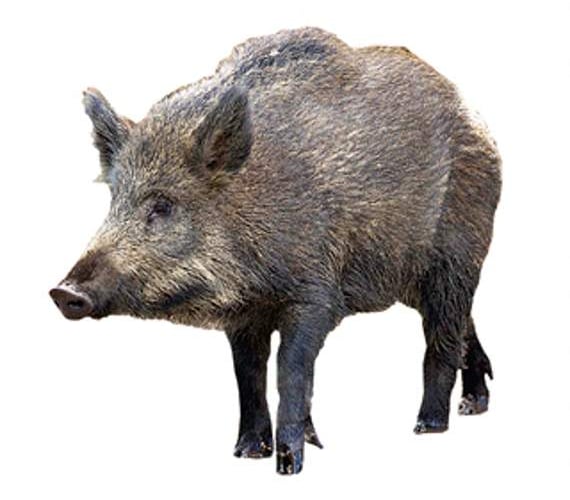
FEARS are growing among pig farmers that the Forest’s wild boar could be the catalyst for a devastating outbreak of African Swine Fever (ASF) in the UK.
The spread of the disease across mainland Europe has left farmers fearful of an outbreak here.
And there are concerns that the Forest’s wild boar population – the biggest in England – could contract the disease from infected pork products left behind after picnics and barbecues.
The Department for Environment, Food and Rural Affairs (Defra) is asking visitors and local residents to ensure that any waste food is disposed of securely to minimise the risk.
“We’ve never had ASF in the UK, but it’s progressing at an alarming rate across Europe,” said Gloucestershire pig farmer Sophie Hope.
“The level of wild boar in the Forest would maintain a disease like ASF quite readily – and the population is growing because while true wild boar have only one litter of two or three boarlets a year, these feral wild boar breed more often and have larger litters.”
ASF can’t be caught by humans or other animals – it’s exclusive to pigs. It can be spread via infected pigs or their faeces or body fluids and contact with anything contaminated with the virus, including people and their clothes, vehicles and other equipment.
With the potential for anyone travelling to and from infected areas in Eastern Europe to spread the disease, Sophie says farm bio-security is now more important than ever.
“If there was an outbreak here it would be similar to foot and mouth in 2001.
“Farms would be locked down immediately, pigs slaughtered, vehicle movement restricted and our export industry – which is worth around £375m – devastated.
“It would also severely affect communities dependent on tourism. Given time, the market to Europe would re-open, but China, for example, would demand complete disease freedom and, if ASF was in wild boar, it would be very difficult to prove that.”
National Farmers’ Union county adviser Will Frazer said: “Pig farmers are certainly concerned about the spread of African Swine Fever in Europe. There’s been talk recently of erecting fences on the Polish border, where wild boar are so prolific.
“If we allow our own wild boar population to grow in an uncontrolled way it becomes a huge concern.
They’re increasingly rampaging in urban areas of the Forest, trashing gardens and bins.”
The National Pig Association, which has been tracking the progress of ASF, says most of the ‘jumps’ seen in Europe were down to people bringing infected pork products into new areas and these products being eaten by wild boar or pet pigs.
Defra says that, should ASF become established in the Forest’s feral wild boar population, the impact could be high.
But Defra claims the likelihood of this occurring is low.
However NPA chief executive Dr Zoe Davies says: “ASF can live in frozen pork products for up to 1,000 days and people travelling here from Eastern Europe often stock up with their traditional foods.
“I’ve had sleepless nights after seeing Polish lorry drivers barbecuing their supper in a layby. Pigs will eat anything – and in this country around 40 per cent are reared outside. If those drivers had thrown their leftovers over the hedge, the consequences could have been disastrous.”
Zoe is currently working with Forest MP Mark Harper, Defra, the Forestry Commission and community action groups to co-ordinate efforts to control the boar population.
“It’s important not just to keep the numbers down, but to keep them within the Forest,” she said.
The current ASF outbreak began in Russia in the early 2000s. The likelihood is that it started to spread through wild boar in the northern forests eating infected pork products discarded by soldiers.
It was detected in feral pigs in Lithuania and then in Poland in 2014 and has since been found in feral and domestic pigs in Estonia, Romania, Moldova, Latvia, the Czech Republic and Hungary. It is also present in Belarus, Russia and Ukraine.
See information on spotting and reporting ASF at www.gov.uk/guidance/african-swine-fever, while more details about the Forest wild boar can be found at www.forestry.gov.uk/wildboar
Comments
This article has no comments yet. Be the first to leave a comment.