

AN injunction is in place preventing six named men, a paving firm and anyone else from damaging an environmentally-protected site on the Gwent Levels.
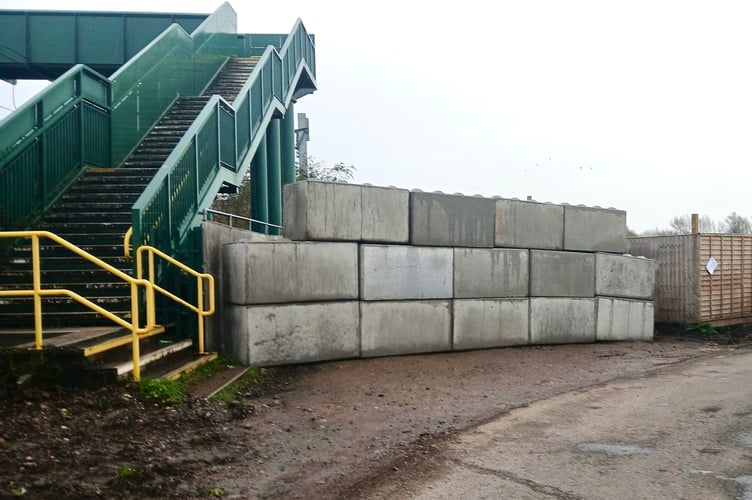
Large concrete blocks have now been placed at one entrance with a wall of giant grey concrete blocks placed across another.
The order is intended to prevent waste dumping, which is threatening the fragile eco-system dependent on the ancient reens, or man-made ditches, that run across the levels and host a wide range of rare aquatic plants and insects, including the shrill carder bee.




The injunction has been obtained by environmental regulator Natural Resources Wales (NRW) and Monmouthshire Council to stop further unauthorised activity and environmental damage on Whitewall Common, Magor.
The common is part of the Magor and Undy Site of Special Scientific Interest, or SSSI, the highest form of designation for nature sites.
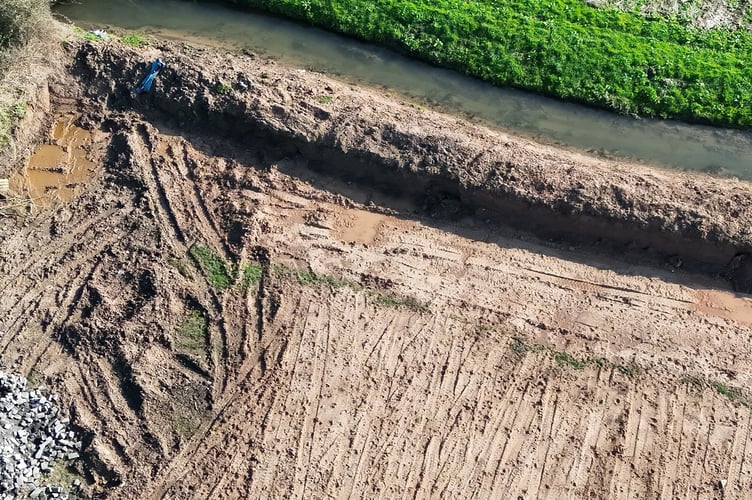
Drone photographs showing work at the site, including to the reen embankments, has been released by NRW.
Copies of the order, which is in place for at least two years, are displayed at the site.
The full injunction, granted on February 26 at the Cardiff District Registry of the High Court, applies to six named individuals and one company, as well as “persons unknown”.
The land, next to the South Wales mainline train track, has been blocked off and NRW has warned anyone entering the site “to carry out restricted activities may be held in contempt of court, risking fines, seizure of assets, or imprisonment”.
The six individuals named are Ronald Connors, Jeremiah Connors, Luke Williams, Anthony Strange, Morgan Harvey and Andrew Barton and the company Tobermore Paving & Development Ltd.
It also applies to “persons unknown” and the activities listed as being prevented are:
- Depositing waste or materials,
- Carrying out construction or groundworks,
- Damaging or altering reens or watercourses, including Whitewater Winter Sewer Reen and Mill Reen,
- Interfering with flood-risk management infrastructure,
- Moving or removing concrete blocks placed to secure the site.
Ioan Williams, NRW operations manager, said: “The Magor and Undy SSSI is internationally recognised for its rare wildlife and ancient reen systems, and we will not allow its destruction to continue.
“Securing this order reflects months of hard work by our teams and our partners at Monmouthshire Council. It’s a vital step in protecting one of Wales’ most sensitive and historically important landscapes.
“Anyone considering breaching this injunction, whether named in the order or not, should be in no doubt about the consequences and this injunction should be a clear deterrent.
“If you enter this site to dump waste, carry out works, damage reens or interfere with the concrete blocks, you will face legal action. We will continue to use every legal tool available to protect this SSSI and hold those responsible to account.”
Monmouthshire Council deputy leader Paul Griffiths said: “This injunction sends a clear message that unlawful activity causing environmental harm will not be tolerated in Monmouthshire.
“We have worked closely with NRW to secure this order and to take immediate action on the ground to prevent further damage.
“The council will continue to use all available legal powers, alongside our partners, to safeguard this sensitive site.”
Comments
This article has no comments yet. Be the first to leave a comment.