

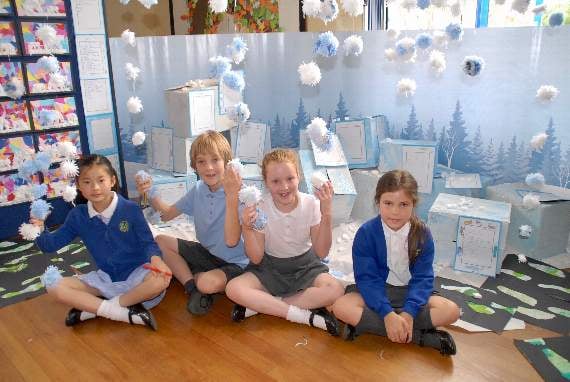
RECYCLED rubbish was put to colourful use as part of a school’s art week, and spelt out a powerful message about pollution.
Parents and visitors who saw the results of Coalway Junior School’s creations entered a room ‘under the sea’, which transformed as you followed the footsteps from the beautiful blue ocean and pristine Arctic, to rubbish strewn seas and melting ice caps.
Painted plastic bottles and polysterene were among the recycled waste youngsters used to create the two worlds – one healthy and one filled with problems.
The school is already an Eco Awards School, and this year’s arts week project was co-ordinated across the classes and year groups by its eco co-ordinator Sean Tadhunter.
.jpeg?width=209&height=140&crop=209:145,smart&quality=75)
“It is helping start a conversation among pupils and their families about what we can do.
“We have this beautiful environment, but it’s being destroyed. We have beautiful animals in beautiful landscapes and lovely fish in the ocean, but the reality is different, as you find as you walk through.
“The children have really engaged with the theme and have been fascinated but also concerned, and feel very passionately about wanting to do something about it.
“This arts week has given them a voice and a platform to express their worry, and parents and visitors have gone ‘wow’.
“The whole school, pupils and staff, have really come together to make it a success, and it’s great that the children have used recycled rubbish to make great art, while getting the message across, which, with Coleford itself looking to gain plastic-free status, is gaining momentum.”
With striking slogans like ‘Go Green – there is no Planet B!’, striking designs, poems and fact files, the week was inspired by the book North: The Amazing Story of Arctic Migration, which traces the Spring movement of millions of animals to enjoy the continent’s rich food supplies as the ice recedes in the warmer weather.
Installations included two giant globes, one showing the world as it should be, the other weighed down with rubbish.
“The first globe shows good things about the Earth, filled with messages and tips that help save the environment... the other one has all sorts of problems,” said pupil Cameron Harris.
Gene Barton added: “The first one has lots of advice, it’s about saving the Earth by recycling more.”
A giant picture of a blue sea filled with wonderfully coloured fish made with watercolour papers and collages showed how things should be.
“This is what we want the fish to look like and we want more in the sea,” said Lillie Wildin.
“We also did lots of research on the iPad about global warming and climate change, the ice caps melting, overfishing and plastic pollution and made fact files to be put on display.”
Lexie Phelps added: “But as you walk ar- ound the corner, this is what the world actually looks like, filled with pollution. Lots of animals are eating the plastic, like our whale made out of a tent.
“My dad thought it was great that we were using the plastic for art by recycling bottles and painting them.”
Year 3 pupils made a ‘Beautiful Arctic’ installation to show how it should be, with hanging pom poms for snow balls, polystyrene for snow, cardboard boxes painted light blue and white for icebergs, and pictures of polar bears made using cotton buds and white tissue paper on coloured paper.
“We’ve got giant clean footprints that turn into ones filled with rubbish as you walk on,” revealed Evie Harris.
“It shows the way we are making a bad mark on the world.
“My mum thought it was great that we were getting the message across through making all this art, that littering is really bad.”
Jessica Sears added: “We did poems about the beautiful Arctic and the animals coming together in summer. We can make a difference by coming together and sorting the planet out. We’re losing animals.”
And Melissa Chung said: “It’s just bad for the animals, all the pollution is destroying their habitats.”
Round the corner, a display of eye-catching T-shirts decorated with permanent markers spelt out powerful slogans and designs.
“I tried to get the message through that the ice caps are melting and we must do things to stop global warming by using less heat and energy,” said Aston Barnett, while Josh Jenkins added: “My T-shirt has a picture of a turtle in the sea, with the message that we need to keep our seas plastic free.”
The sea surface on high changed to one filled with plastic painted bottles instead of fish, and a net full of grey fish made out of black oil pastels and rubbish also made a big impact, with poems on the walls expressing the youngsters’ concerns.
Drew Sheen said: “The net is about overfishing and all the rubbish in the sea, which marine animals are eating. It’s lovely art out of rubbish, but it’s sad.”
Alfie Smith added: “Animals are being harmed by what’s being thrown into the ocean,” while Bryce Mather said: “It’s good and bad, the fishermen are cleaning the litter but emptying the sea of fish at the same time.”
An installation split by a window also gave a reminder of what we are losing without action.
“This is what the Arctic should look like on one side with lots of ice for the animals, but this is what is happening, polar bears and seals having to cling on for life to small bits of ice,” explained Lexie Phelps.
Visitors to the exhibition included youngsters from Coalway Infants School, who were trea-ted to readings from North and were amazed by the artworks.
Junior school assistant head James Barrow said: “The infants have come here to experience the art, hear the story and learn how pollution is affecting our seas and planet – it’s tremendously valuable.
“Arts week is a tribute to a teacher we lost, Mrs Liz Waite. It’s her legacy, and this year it has a poignant theme that the children have fully responded to.”•See more photographs on the Review's facebook page www.facebook.com/theforestreview
Comments
This article has no comments yet. Be the first to leave a comment.