
SICKNESS levels for the Forest of Dean District Council's staff have reached an all-time high and rewards might now be considered for employees with a good attendance record.
The latest figures show the Forest council's rate reached 12.49 days per full time worker by December 2009 compared to a local government average of 10.9 days. Comparable figures for neighbouring Tewkesbury Borough Council are 5.5 days per full time equivalent (FTE) employee and Cheltenham 8.48 days.
Speaking at the council's Corporate Scrutiny and Review Committee, Cllr Derek Biddle said: "This level of sickness is alarming especially when compared to the numbers we employ."
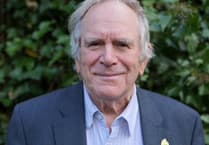
Cllr Brian Robinson, who was presenting the council's workforce strategy, reported that the council does have: "High levels of sickness compared to other authorities and benchmark statistics".

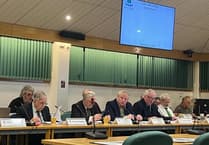
And he confirmed the figures are now at their highest level but said long term sickness may have affected the statistics.
"Although we did see an improvement," he said. "It has deteriorated again. Tackling sickness remains an important issue for this council."
Cllr Norman Stephens commented: "In a year or two this could be the equivalent of three weeks a year. It compares very badly with the private sector where levels are half as much."
Cllr Marion Winship asked whether consideration would be given to following the private sector in rewarding good attendance, possibly through 'time banking' where workers who don't have any time off sick are allowed to bank time as additional holiday. Other incentives in the private sector include adding names into a draw for a car or other rewards.
Chair of the committee, Cllr Philip Burford, and Head of Paid Service, Sue Pangbourne, said a system of incentives would be looked into, alongside a long term strategy to manage absence issues.
•Forest of Dean District Council employed 321 full time equivalent employees in 2009. Labour turnover figures for the same year was 29.29 per cent, the majority of the turnover being casual workers (75) and only a tiny proportion as the result of retirement or early retirement (three).
Comments
This article has no comments yet. Be the first to leave a comment.