
PERMISSION for a wind turbine on a Forest farm has been overturned by a High Court judge – and the decision could have implications for similar projects around England.
The case hinged on whether part of the package of community benefits from the development at Severndale Farm in Tidenham should have been taken into account by the Forest Council when it gave planning permission.
Justice Dove concluded the council “was not entitled to take into account as a material consideration in their planning decision the offer a local community donation made by the interested party as part of their proposal.
“As a consequence the decision they reached was unlawful.”


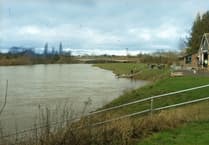

The judge’s decision has been greeted with disappointment by supporters of sustainable energy and by the council.
The planning application was submitted by Woolaston-based Resilience Centre in January last year with the intention of establishing a community investment scheme.
That would have seen donations, estimated at £15,000 to £20,000 a year, for community schemes over the 25-year life of the turbine.
A report to planners
said that representations showed the local community was “not fully supportive” and later resident Peter Wright started the legal action.
In his statement to the court, Mr Wright said he had attended a presentation where funds from the community turbine scheme at St Briavels had been used to provide, among other things, a defibrillator, heaters at the church and a senior citizens’ trip.
Mr Neil Cameron QC, acting for Mr Wright, said the community donation amounted to a financial donation that did not serve a planning purpose.
Justice Dove said: “Simply being a contribution for a community benefit related to a local strategy for health, social or cultural well-being does not make that contribution in and of itself material to a planning determination.”
Sue Clarke of the Resilience Centre said: “None of the parties in the case disputed the fact that the project would have significant local community benefits and there was no question as to the integrity of the applicant.
“The planning permission, issued last September, was supported by a democratic vote of the Forest of Dean District council’s planning committee with 10 votes in favour to three against with one abstention.
“The community-owned energy model has been recognised as an exemplar both nationally and within Europe and the public social, environmental and economic benefits are already proven at Great Dunkilns St Briavels.
However, focusing specifically on the community fund elements of the project approach in this case, the ruling concluded that these community benefits have no planning purpose and the weight afforded by the council in its balancing exercise (required as part of the decision making process) was therefore deemed unlawful.
“This ruling, which quashes the planning permission for Severndale, is disappointing on many levels and is yet another blow for the UK community energy sector.
“The ruling relies on established case law for commercial enterprise. The fact that this is a community-led project, which would be community-owned and operated with the primary purpose of benefiting the community in which it is based, did not result in the project being distinguished from commercial projects by the judge. This is despite the desirability of community-led projects being the basis of recent changes to planning policy, which also purport to give local people the final say on planning for wind turbines.
“The decision may be celebrated by the small minority who opposed the approved project but in reality we consider this to be a massive loss for the community as a whole and clearly undermines local democracy.”
A spokesperson for the Forest Council said: “The council is disappointed with the judgment and will now take time to consider its position.”
The Resilience Centre is waiting to see if permission is given to appeal against the judge’s decision.
Comments
This article has no comments yet. Be the first to leave a comment.