
THE Review, in its edition of June 27th, is a little off beam in stating that The Friends of the Forest are against Northern Arc. We like to think of ourselves as a positive lot looking for rather than against well-planned environmentally friendly developments that protect or enhance the quality of life. That is also the mission that goes with AONB status for which we are campaigning.
Northern Arc may merit some further discussion on its precise siting but there is no doubt, in my mind anyway, that it will when realised bring benefit to Cinderford and the Forest.
The value of having the designation of AONB is better illustrated by the consent given by the County Council for the removal of the spoil tip from Quidchurch Gale, Cinderford, by up to 16 thirty ton lorry movements a day for up to three years down through the Forest on a specially consolidated track past Mallards Pike and dumped at the railhead at Whitecroft. Here it will be reloaded on to trains which will take the coal and aggregate materials mixed with sawdust to a power station in South Wales.
Normal planning permission for this was not required as it was made under the General Permitted Development Order of 1995. The decision bypassed the District Council, and the parish councils were not consulted. In supporting the approval the county remarks: "The site is not within a National Park or AONB." So, tough on us – and there are a lot more spoil heaps around.

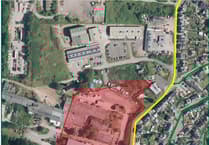


Some will argue that this undertaking should be supported as it makes good use of Forest resources; that we should use the rail system more for freight, and that a few jobs might be created.
Others might argue that heavy trucks rumbling through the heart of the Forest past a site created to attract visitors is not going to encourage tourism, and that the unloading of these materials close to houses in Whitecroft is not very kind. Others support or fear that this development could lead to a big expansion of the local rail network to accommodate freight trains.
AONB status, in a case like this, should cause a statutory challenge leading to a proper environmental assessment to weigh up the pros and cons, and be a strong influence on the final decision.
Bob Smyth, in the same edition, reports on the glossy brochures produced by the Countryside Agency as an alternative to its usual role in examining AONB proposals and making recommendations. This goes under the name of Integrated Rural Development.
These publications might well supplement other books on the Forest and they could be of value to A Level Geography students, and some like the Archaeological Survey, did need doing. They have certainly transferred a lot of tax payers money into the pockets of academics.
Unfortunately they do nothing to provide a measure of planning protection to the Forest or that Special Status many of us feel is deserved by this vigorous community set in one of our few remaining ancient forests. The fact that the Countryside Agency has been granted another three years over their task is not because they are doing so well but simply because they are so far behind on producing anything remotely credible.
The bedrock on which local development is based is the democratically arrived at Local Plan. The Friends of the Forest simply want to see that supported by a real, genuine, special status based on statute law. – Roger Horsfield, Highfield, Pastors Hill, Bream.