

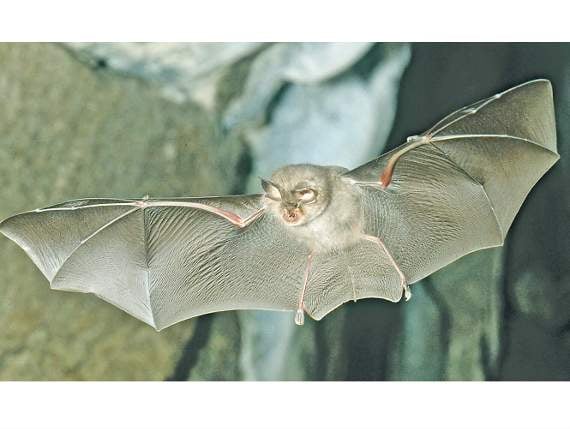
HARDY Hebridean sheep are set to provide a lifeline to a threatened species of bat at a Forest nature reserve.
Lesser horseshoe bats are declining rapidly in number across the UK, and wildlife experts hope that sheep grazing at Stenders Quarry, a Site of Special Scientific Interest (SSSI) cared for by the Gloucestershire Wildlife Trust, will boost bnat numbers.
The quarry site near Mitcheldean has one of the greatest concentrations of lesser horseshoe bats in the UK, but they need wide open spaces to forage for food, where they fly about five metres above the ground in search of beetles and moths.
And the Hebridean sheep will be introduced to the area to recreate historic grazing conditions by maintaining spaces of species-rich grasses and plants, which will encourage a much wider variety of insects to thrive.



.jpeg?width=209&height=140&crop=209:145,smart&quality=75)
Animals would have previously maintained open areas by nibbling the regrowth of trees and shrubs as they moved around the Forest in large flocks.
Kevin Caster, Forest of Dean Nature Reserves Manager, said: “The many derelict anthills at Stenders highlight the lost open grasslands that were once here, and managing the build up of thorny scrub on these steep slopes has been difficult to maintain.
“Hebridean sheep are ideal because they much prefer leafy scrub to grass.
“The sheep can enjoy this special reserve alongside the green woodpeckers, butterflies, badgers and foxes, knowing that it will also host a bat feeding ground.
“Their tunnel roost is conveniently positioned in between two other known bat hibernation sites, so the future of wildlife is looking good at Stenders Quarry,” he added.
Lesser horseshoe bats are native to the UK and are one of our smallest bats – about the size of a plum – and have characteristically fleshy noses shaped like a horseshoe.
As free hanging bats, roosting conditions are more difficult to find.
The colony currently uses a disused tunnel at Stenders, and GWT hopes to move debris that has fallen in at one end in the hope that it may one day become a maternity roost.
GWT staff and volunteers will also coppice and thin the woodland edges at the nature reserve to further improve foraging habitat and flight paths for bats.
The work aims to bring greater biodiversity to the Forest, along with the engagement of local people with the wildlife that lives all around them.
The project has been generously funded by Viridor Credits Environmental Company and Enovert Community Trust.
Comments
This article has no comments yet. Be the first to leave a comment.