
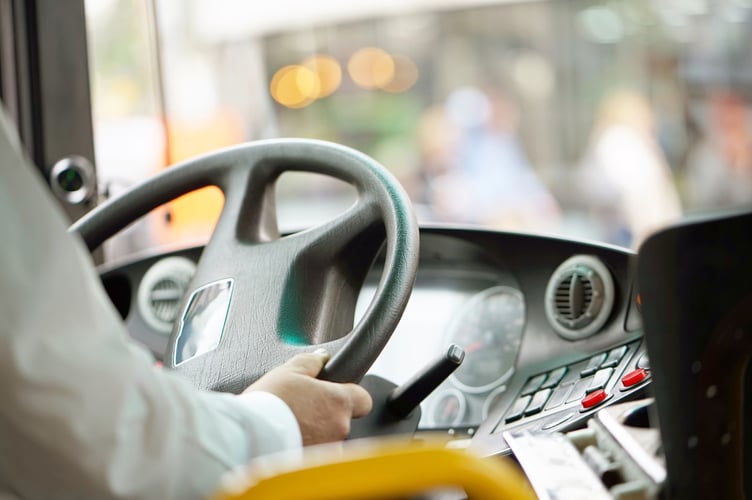
WITH frequent trips to Gloucester and the increasing difficulty and expense of parking there, the Forest View family are now using bus passes as much as possible to visit the city.
The view from upstairs on the 23 bus service to Gloucester gives the passenger a new perspective of landscape and recent housing developments. From this privileged position, you can see the features of the Severn estuary invisible to travellers by car.
You can appreciate the panorama of the river as it meanders around Rodley and the meadows south of Minsterworth, and, from a different perspective, you can see from your elevated position the massive linear development of housing in the last year or so from Minsterworth to Chaxhill.
.jpeg?width=209&height=140&crop=209:145,smart&quality=75)
This is not a nimby objection to new housing, but I’m curious to know how this elongated settlement of housing will work. The bus service will clearly be of some advantage, but will residents be able to walk out for a newspaper, or a postage stamp or a litre of milk, and meet their neighbours, as residents of traditional communities do?
The settlement is divided by the very busy A48, which cannot be safely crossed by pedestrians. There seems to be little accessible community space for the new residents. I hope that it works out as a residential community, but from my perspective on the upper deck of the 23 it seems a possibly unsocial place.
Stagecoach buses that cover the Forest are the successors to the old Red and White buses, which were established by John Watts of Lydney in 1929, covering the Forest area far more comprehensively and frequently than the modern bus service, in the days when most households did not have their own vehicles. 1929 was also the year in which the Lydney to Cinderford passenger train service via Parkend ceased, which was not entirely a coincidence. In the 1970s I could commute to Cardiff from St Briavels by bus at 6.40am, changing at Chepstow, and be at my desk before 8.30am – a journey not conceivable today.
Those were the days, the 1950s, celebrated in a Flanders and Swann bus song, when buses ran in convoys and travelled along the middle of the road at 20mph. There were ‘bus conductors’, who sold the tickets and who were the only people allowed to ring the bell. People could smoke on the upper deck, the drivers were alone in their cabin concentrating on driving without worrying about taking cash (or bus passes) or opening the vehicles’ doors (this was when there were no bus doors).
The regular Stagecoach services are now augmented by the voluntary bus services offered by the Community Transport services through the Newent Community Link, Lydney Dial-a-Ride, Bream Voluntary Car service and Lydcare (Lydbrook).
Just one word of advice to passengers on Forest buses. It is of course a matter of courtesy for passengers to thank the driver when they leave the bus.
But to do this in an authentic Forest way you should use local terminology.
‘Cheers’ is the word of thanks, and ‘Drive’ is the informal term for a driver.
Say ‘Cheers, Drive’ to the driver as you leave the bus, to express your thanks for a comfortable, scenic and safe journey.
Comments
This article has no comments yet. Be the first to leave a comment.