
RECENTLY, it seems that almost everyday there is an article published about our local rivers and waterways.
It’s a subject which is very close to the heart of people of the Forest of Dean and Monmouthshire, including members of local and national government.
With the legal battle raging on over the River Wye, and the public raising significant concerns about the level of local sewage discharge - we must consider this to be a crisis of our local rivers.
This leads us to pose the question: What is the solution to our river crisis?

“
“The simplistic answer is pollution is causing degeneration of these rivers”
Cllr Andrew McDermid, Rivers Champion for the Forest of Dean District Council
What is the problem?
Put simply, the public and some members of public office are concerned about the condition of our local waters, largely due to the level of pollution.
This isn’t just a local issue. According to The Rivers Trust, there is “no single stretch of river in England in good overall health.”
Pollution could be due to sewage discharges, or it can be due to residential, industrial or agricultural factors, which produce what is known as per- and poly-fluoroalkyl substances (PFAS), otherwise known as forever chemicals.
Their name comes from the fact that most of them do not break down easily in the environment, and according to research by The Rivers Trust, they pose a serious pollution risk.
I asked Cllr Andrew McDermid (Green Party), Rivers Champion for the Forest of Dean District Council, what the biggest factors were for the degeneration of our local waterways.
Cllr McDermid said: “I think the Wye is two-thirds diffuse agricultural pollution, run-off from fields and poultry units, and sewage makes a huge contribution to that. In the Severn, as I understand it, it’s more to do with sewage pollution.”
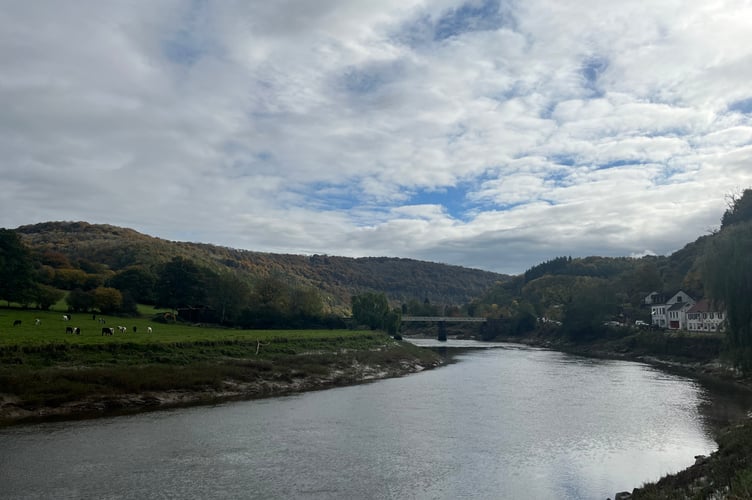
He also believes that temperature increases can play a role in river pollution.
Cllr Andrew McDermid added: “There’s the climate itself. Heat reduces the flow and abstraction contributes to that.”
Polluted rivers can be harmful to the environment, wildlife and to us. In fact, The Wildlife Trust reported in 2021 that “pollution is the biggest threat to wildlife on our waterways.”
This is certainly a huge concern when it comes to the River Wye.
A brief history of the River Wye crisis
In the mid 1990s, the River Wye was designated as a Site of Special Scientific Interest. This is a formal conservation designation denoting a protected area in the country, representing the most valuable or special wildlife habitats and geological features.
The Wye received this specification likely due to it being a migration route for certain wildlife and a critical breeding ground for them.
Over the years, numerous concerns about the River Wye and local waterways were raised, but they began to accelerate from around 2020, when visible thick algal blooms prompted widespread testing and media investigations.
Eamon Bourke, Lead Communicator for Friends of The River Wye said: “I think the river has been polluted for decades in some way. Our organisation formed in 2020 after the unprecedented big algal bloom, but that wasn’t the beginning of pollution in the Wye by any stretch of the imagination.
“Sewage works used to be a lot less sophisticated, they didn’t have phosphate strippers and all sorts, so there was a ton of pollution coming in from sewage historically, and similarly agricultural practises have been very intensive in the past like the 70s and the 80s where there was less technology, so it was polluted even then.
“There’s always been some level of pollution in it from human populations living along it, but the big change in the water quality seems to have taken place in the last ten to 15 years.”
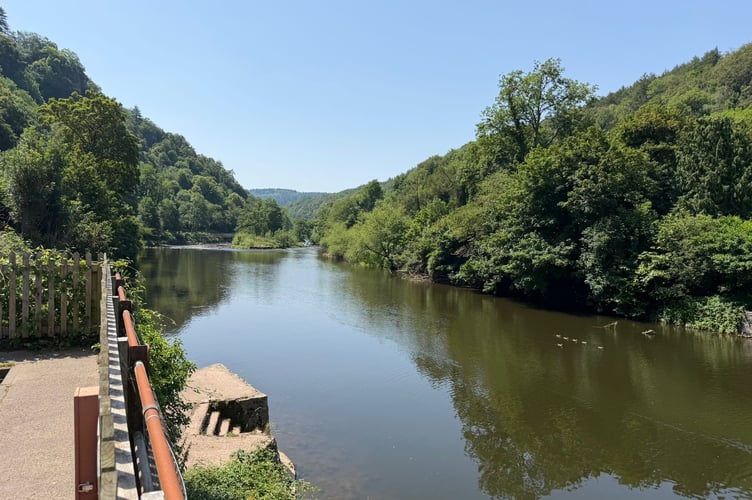
There were allegations of agricultural pollution, possibly from raw human and industrial sewage being discharged, and phosphate-rich manure - which was alleged to be from poultry farms.
Mild algal blooms have always been present, but recently the blooms increased in severity. According to Wallingford HydroSolutions, a water and environmental consultancy, before 2010, blooms started around 73 miles upstream of the tidal zone, but the 2020 bloom almost doubled this distance, starting 144 miles upstream of the tidal zone.
Phosphate levels were widely believed to be the culprit of the starting point’s migration.
In 2021, a campaign known as Save The Wye was launched and it garnered huge support, which helped to raise awareness of the crisis.
In 2024, legal firm Leigh Day, representing those affected by the alleged pollution, wrote to three companies they believed were responsible for the decline of the River Wye. This case is currently going through the courts, with the first hearing having occurred on April 27 this year.
Sewage discharge and concerns
Sewage discharges are the release of untreated sewage into waterways which includes our rivers. Typically, this is via storm overflow valves, designed to release water from the sewer network when there is too much.
The Environment Agency has strict rules on the use of storm overflows, which water companies must abide by. However, allegations suggest water companies are dumping huge quantities of sewage in our rivers every year by using the storm overflows far too regularly.
Cllr Andrew McDermid said: “Sewage outflows are permitted in certain weather conditions like storms, but we’re having sewage outflows when the weather is nothing out of the ordinary. I’ve been worried about this and I’ve been chasing the reasons why this happens, but getting nothing much back.
“I think the volume of sewage discharge is inevitable due to the state of the water network here and nationally, it’s archaic. Traditionally, clean water and sewage goes down the same pipe and ends up in a watercourse where dilution would have been okay because of a lower population and less house building. But now we’re at a bottleneck point where it is a crisis situation.”
Cllr McDermid’s point about the aging water network was mirrored by the Friends of the River Wye.
Eamon Bourke, Lead Communicator for Friends of The River Wye said: “All over the country now, we’ve seen the big scandals such as in Channel 4’s documentary Dirty Business which exposed the extent of the crisis with sewage works, and how archaic they are. They haven’t been updated and they’re not fit for purpose.”
Concerns have also been raised by a number of residents in the Forest of Dean and Monmouthshire areas. Various posts to community groups have been seen this year using live sewage data.
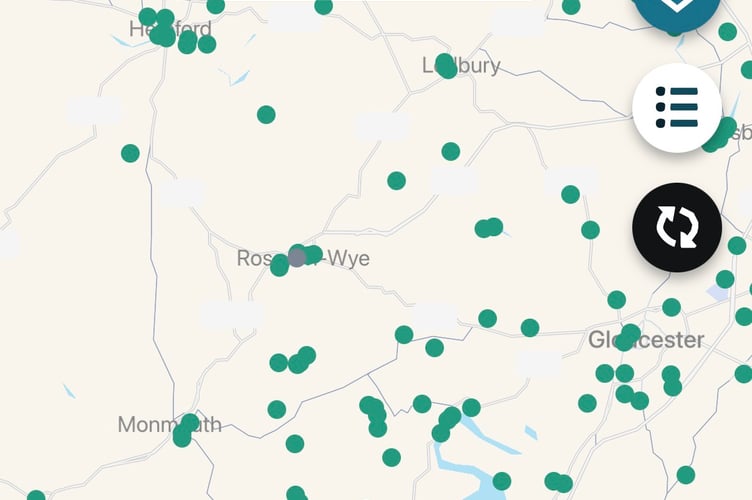
Cllr McDermid said: “I would say their concerns are justified. Reading the overflow data is alarming.
“As a council, we are conscious of this and we’ve pointed this out to the water company and I’ve been on to the Environment Agency, and we’re doing what we can - but we’ve not really reached a situation which we find acceptable with regards to discharges.”
The data residents have used when posting on social media comes from an app developed by Surfers Against Sewage (SAS) in 2013.
The campaign group told me it was necessary to develop the app, part of its Safer Seas and Rivers Service (SSRS).
Chloe Flood, Senior Campaigns Officer at SAS said: “We are sick of swimming and surfing in sewage whilst drowning in ever-rising bills. Water companies have been dumping sewage into our waters for decades, and it’s harming ecosystems and our health.
"We developed the Safer Seas and Rivers Service so that water users can check for sewage alerts before diving in. Whilst it's ludicrous that we even need to check for pollution alerts before swimming, we know that rain or shine, water companies are dumping sewage into our lakes, rivers and seas. While we foot the cost - in both rising bills, and the impact on our health.”
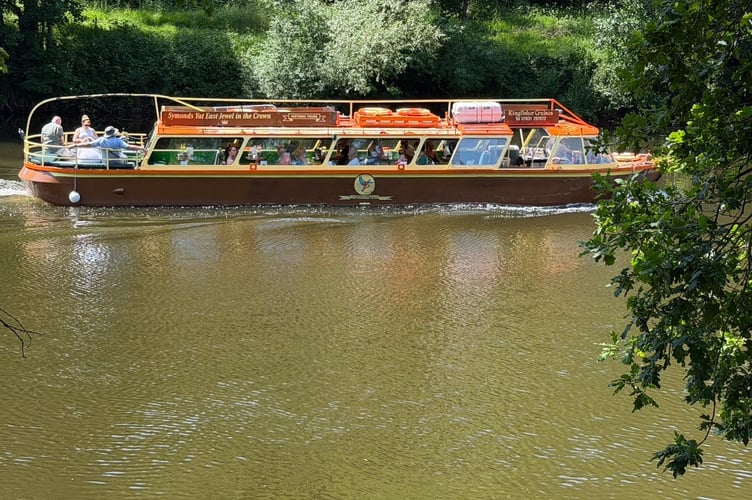
Eamon Bourke of the Friends of the River Wye is local to the river, living near Hay-on-Wye. He told me from a local perspective, he got involved after witnessing the change of colour in the river - something which concerned and affected locals.
He said: “We were witnessing a real ecological collapse right in front of us.
“One of the reasons we moved here is because it’s so picturesque and so beautiful, and the river is one of the reasons for this and why so many live along it. This idea of it changing to something you couldn’t use as a swimmer or a canoeist safely was a big factor [for local concerns].”
Severn Trent Water, the water and sewerage company that serves much of The Forest of Dean, told me it has seen improvements and has more planned.
A Severn Trent spokesperson said: “We want to assure customers we’re making thousands of improvements to improve river health, including through investing £160m across Gloucestershire and the Forest of Dean.
“Storm overflow spills decreased by 41 per cent in 2025, and while this is due to a combination of both significant investment and drier weather, it shows the real impact of our investment and commitment.
“We’ve delivered thousands of improvements right across our region, including many that benefit the Forest of Dean area. We are always working to understand where we can reduce spills, and have more improvements planned for the River Severn as part of a wider investment in reducing spills from storm overflows.
“We know how much rivers matter to the communities we serve, and we share that passion. By continuing to invest, and working closely with partners, we’re determined to continue to deliver lasting improvements for our customers and the environment.”
Welsh Water, which serves much of Monmouthshire, also said it is investing in storm overflows.
A Welsh Water spokesperson said: “Both England and Wales are working to tackle issues surrounding storm overflows, with a slightly different focus. Wales is focused on tackling storm overflows that cause the most environmental harm first.
“We operate over 2,300 storm overflows in Wales as we have a very high number of assets for a relatively small population.
“Many of our rural communities are served by smaller sewerage networks and storm overflows, which are essential to ensure networks do not become overwhelmed and flood properties. A spill from a very small rural overflow in Wales is recorded the same as a huge storm overflow in a large UK city that you could drive a bus through.
“Also, as a country on the western side of the UK, we have some of the highest levels of rainfall. The more rainfall, the more times the sewer system is at capacity and will spill.
“Wales has some of the best bathing waters in the UK and 44% of our rivers in Wales are in good ecological status compared to 14% in England.
“We know though how important water quality is to our customers, which is why we are investing £4bn, including £2.5bn on environmental projects, in our investment period for 2025-30.
“This includes £889m on storm overflows and a further £42m on eight schemes to target improving bathing and shellfish waters.”
What is the solution?
Currently, the UK Government and Welsh Government are following advice and guidance set out by the Independent Water Commission, set up in 2024, with a goal to overhaul the water sector and restore public trust.
Last year, the Chair of the Commission, Sir Jon Cunliffe published his final recommendations which include a single integrated water regulator, new regional water system planning authorities, stronger environmental regulation, infrastructure and asset health reforms.
Many believe the government needs to be tougher with its approach, including Surfers Against Sewage.
Chloe Flood, Senior Campaigns Officer at SAS said: "Profit from pollution and treating our wild waters like open sewers cannot continue. All water companies must be structured so that public and environmental health comes first. The government must take bold action by taking back control of failing private water companies and removing the profit motive.
“In Wales, Natural Resources Wales must be transformed into a tough, independent regulator with teeth, and the government must set legally binding targets to end sewage pollution and protect public health. Anything less is merely tinkering at the edges or applying a plaster to an utterly broken system."
Cllr Andrew McDermid explained there are two avenues for a solution. One being top down, such as government action, and the other being bottom up, which involves educating the public on our local rivers and waterways. However, he said these are ways to tackle the crisis, but on their own it won’t be enough.
He said: “The government can only do top-down stuff. It’s turned away from nationalisation, but I don’t think nationalising the water industry is the silver bullet because Welsh Water has its own problems and that’s not a private company.
“You’re still going to have the problem of raising money to replace the ancient, antique infrastructure.”
For resident action, Cllr McDermid explained education about local waters is important, from a school age upwards. Not littering is a help as it can go down the drain and end up in the local rivers, and being aware of your dog’s flea treatment if they swim in the rivers, as it can become toxic in waters to invertebrates.
He said: "People need to be aware that their day-to-day actions have an impact on the river.”
Friends of the River Wye urged locals to get involved with action groups where they can.
Eamon Bourke, Lead Communicator for Friends of The River Wye said: “The thing that we’ve noticed locally is that everyone values the river.
“The one message I would give to residents is to get involved with your local groups and become a river guardian.
“Stay focused on the problem. Community action really is where most things happen.
“Communities organising together is where we get things done.”
Key points
So, what have we gleamed so far?
Contributing to the river crisis:
- Old infrastructure that may no longer be fit for purpose
- Financial constraints mean this is unlikely to be reformed any time soon
- A growing population may be increasing sewage and may increase the risk of other pollution such as littering
- The climate crisis may play a role
- Some people are unaware of the crisis
Potential solutions:
- Tougher action from the government
- Investment in the water networks
- Education from a school age about our waterways
- Use bins or take litter home
- Join community action groups if possible
- Remain focused on the goal of restoring the rivers
The Charter for the River Wye and River Wye manifesto
One way Cllr McDermid said the public can help is by supporting the aims of The Charter for the River Wye.
It was developed last year as a shared statement of intent by community representatives, environmental groups, councillors and others with a common goal for protecting the River Wye.
This includes English and Welsh county and district councils which are served by the River Wye.
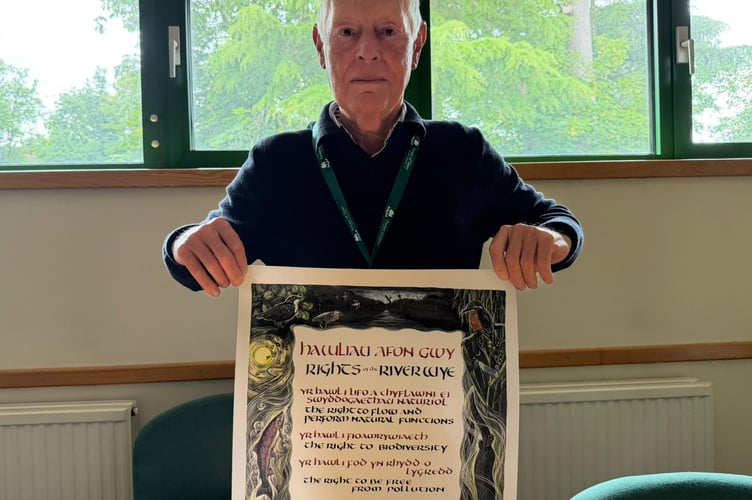
The Charter includes fundamental rights of the River Wye, which include the right to flow, the right to regenerate and the right to be free of pollution.
Cllr McDermid said: “If you take the tack of the river has rights, then you’re really able to get people to take notice.”
Herefordshire Council, via its website said: “People can support the aims of the Charter in many ways, including reducing pollution, improving land and water management, supporting biodiversity, volunteering with local environmental groups and learning more about the challenges facing the river.”
Friends of the River Wye, a grassroots community group and registered charity which works to protect and restore the River Wye, has been taking action by setting up a manifesto for the River Wye.
Within the manifesto, the group calls for a cross-border approach with governments to tackling the pollution crisis and sets out four key points.
- Develop and implement a Water Protection Zone to stop all forms of pollution
- Establish a Wye Recovery Fund to resource a fair and fast transition to river-friendly farming and nature-based solutions
- Strengthen regulations and resource the agencies to enforce against pollution
- Ensure supermarket pricing rewards river-friendly farming and that consumers are empowered with honest labelling
It also set out the Riverside Code, an education tool similar to the Countryside Code, to help protect local rivers and waterways.
Along with following the code, the public can help by submitting their photos of water crowfoot the group’s ‘Big Ranunculus Watch’, which helps to map the disappearance of the plant and where it is recovering.
Will the crisis ever be solved?
“
“I absolutely believe recovery is possible.”
Eamon Bourke, Lead Communicator for Friends of The River Wye
Hope is still there for some, including Cllr McDermid and Friends of the River Wye.
Eamon Bourke, Lead Communicator for Friends of The River Wye, said: “You have to believe there’s a solution, otherwise, as the multiple crises we face with the climate for example, if you give up hope of any solution, then we’re in a very difficult place.
“Rivers have an amazing capacity to regenerate, they’ve done it before. Lots of industrial rivers in the north of England have recovered after they’ve been cleaned up and extracted pressures on them. So, I absolutely believe recovery is possible.”
However, while steps like educating the public on water, signing up for The Charter and pressuring the government to take further action are certainly steps towards improvement, for me, it seems unlikely the crisis will ever fully be resolved.
With a dated water network that seems too expensive to reform, an ever-growing population, and the actions of some people who simply do not care about their rivers - could we really ever see the end of it?
Perhaps only time will tell.
What do you think? Is there a solution to the crisis? Let me know your thoughts by email at [email protected]
Comments
This article has no comments yet. Be the first to leave a comment.