
HISTORIANS now believe a field at Stroat, near Chepstow, to be the site of a parliamentary camp established in the Civil War around the time of the legendary Battle of Lancaut.
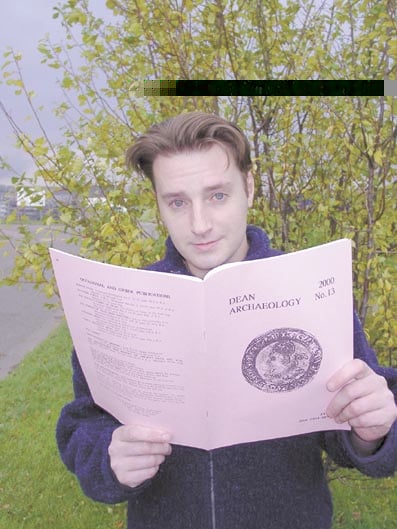
More and more evidence has been uncovered by metal detector enthusiast Mark Meakin, one of the men who discovered a hoard of 119 coins two years ago.
Since then Mr Meakin, a Lydney printer, has made dozens more finds.
Items include axe heads, buttons, buckles and pistol and musket balls.



They have all been examined and recorded by members of the Dean Archaeological Group and are now in the care of Chepstow Museum.
Mark's discovery of a gold coin and 118 silver coins have been examined by Dr B.J. Cook from the British Museum. In a summary to be published in the Dean Archaeology Year 2000 booklet next week, he says their face value at the time they were lost or hidden was £5 4s 6d – "a reasonable sum when a shilling a day was the wage of a foot-soldier ... it would have represented a store of money equivalent to several hundred pounds in modern terms."
DAG's director of archaeology, Alf Webb, said Mark's extensive finds indicated the site at Stroat was probably a camp set up by parliamentary troops involved in the numerous running battles and skirmishes round and about the stronghold of Lydney's royalist family, the Wintours.
The parliamentary troops would have been a detachment from Gloucester which was under the command of Col Massey.
"Mark is making more and more finds and they are enabling us to build up a picture of a camp which had obviously become quite well established," said Mr Webb.
The discoveries are being cleaned at Chepstow Museum where curator Anne Rainsbury said she hoped they would soon be on display.
Mark Meakin told the Review: "I am trying to get as many artefacts as I can to support the coin hoard. I am very happy it is going to a local museum."
Dr Cook said the coins were all of good gold or silver and corresponded well with what one would expect to find for a hoard deposited in about 1643.
•Dean Archaeology No 13, published by the Dean Archaeological Group (£4.95) will be available from next week.