

A FORGOTTEN author who was once donned the queen of the detective novel is set to be rediscovered by crime book fans after her books were republished.
Dorothy Bowers, who grew up and lived in Monmouth, published five novels before her untimely death from tuberculosis at the age of 46 in 1948.
Critics and fans acclaimed her as the natural successor to Dorothy L Sayers, but her early death saw her work go out of print and her novels largely forgotten.
But included in a UK national paper’s recent list of forgotten writers that should be read, new publisher Moonstone Press has now republished all of her books.




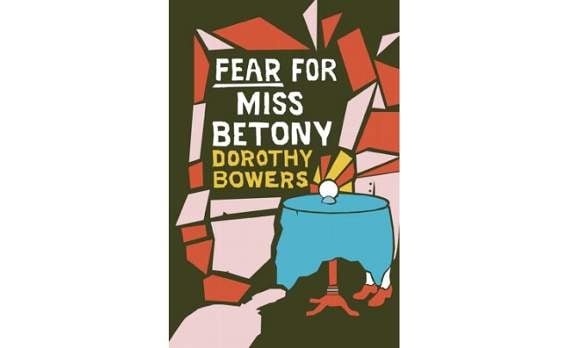
Her fourth book – Fear for Miss Betony (pictured right) – was heralded by the Times Literary Supplement as the best mystery novel of 1941.
And a Moonstone spo- kesperson said: “Despite being the only author inducted into the prestigious Detection Club in 1948, and seen by many contemporary critics as the logical successor to Dorothy L Sayers, Dorothy Bowers’ early death resulted in her books becoming out of print for decades. We are delighted to reissue them in 2019.”
The Detection Club was formed by a group of ‘Golden Age’ mystery writers that included the likes of legendary crime novelists Agatha Christie and GK Chesterton.
Bowers, whose family lived in Dixton Road, was born in 1902 in Leominster and moved to Monmouth aged one when her father set up in business as a baker in Agincourt Square.
She attended Monmouth School for Girls and alongside her sister Evelyn became one of the first women to win a place at Oxford University where she graduated in Modern History.
After working as a history and English teacher, and supplementing her income by compiling crossword puzzles for Country Life under the pseudonym “Daedalus”, she turned to writing in the 1930s.
Her first novel, Postscript to Poison – the first of her four Inspector Pardoe mysteries – was published in 1938, followed by Shadows Before (1939), Deed Without a Name (1940) and Fear For Miss Betony (1941).
The Times praised the award-winning fourth novel by saying: “Every page bears witness to a brain of uncommon powers.”
Her final book, The Bells at Old Bailey, featuring another Scotland Yard detective Raikes, was published a year before her death in 1947.
Her new publisher says Bowers’ books are “intricately plotted affairs, with the clues freely (but subtly) sprinkled throughout the story. Aside from good plots, Bowers also depicts her characters, no matter how insignificant their role, with great care.
“As well as being brilliant reads, these novels bring to life 1930s and 40s life, with thoughtful descriptions of provincial England and the war years.”
Writing in The Independent in its Forgotten Authors series, modern critic Christopher Fowler described her as “one of the most skilful wielders of the red herring.”
The outbreak of war saw Bowers travel to London to work in the European News Service of the BBC.
But she still had her home in Monmouth, with an evacuee recalling how she was taken in at her Dixton Road home after arriving from Ilford at Monmouth’s May Hill Station, and formed a friendship with ‘Aunty Dorothy’.
Rita Doughty, who was just eight when she arrived in 1940, recalled staying with her in Westbury House, and getting her to autograph her friends’ books for her.
But despite Rita’s fond memories, a mystery about the succesful writer remains – what she looked like.
Her new publisher has been unable to find a photo of Dorothy Bowers, despite a widespread appeal, and would no doubt like to hear from anyone who may have a picture at office@moon stonepress.co.uk
All five novels are available from https://moonstonepress.co.uk/dorothy-bowers/
Comments
This article has no comments yet. Be the first to leave a comment.