
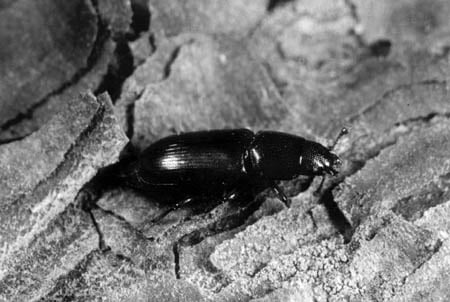
FORESTRY officials are successfully employing a predator beetle to attack one of their deadliest enemies, the spruce bark beetle.
The menace to spruce trees has been severe in the Forest of Dean and throughout the South West after the first outbreak was confirmed in Shropshire in 1982, said Leominster-based scientist Nick Fielding.
"We found we were losing some 5 per cent of trees in infected areas, and five per cent is the margin between profit and loss in forestry," said Mr Fielding, who is in charge of the beetle control programme.
"We introduced a management strategy using a predator beetle and in areas where it is employed tree loss has been negligible.


-at-UoG.jpeg?width=209&height=140&crop=209:145,smart&quality=75)
"Both beetles still exist side by side but the populations are in balance."
The spruce bark beetle, Dendroctonus micans, lays its eggs in spruce trunks and the grubs eat away at the bark until the tree can no longer send enough nutrients from its roots up to its branches and needles.
Until the predator was employed the only effective way of combatting the pest was to remove the affected trees, and there was also a blanket ban on moving timber around from infected to unaffected areas.
But the adult stage of the predator, Rhizophagus grandis, eats the spruce beetle eggs, while its larva stage eats both grubs and eggs.
Rhizophagus is actually a little shorter than Dendroctonus, which is about a quarter of an inch long, and much slimmer.
The threat posed by another beetle – the Asian longhorn beetle – to the Forest has so far not materialised, say thankful officials.
"Touch wood, none have been sighted at all," said district forester Kevin May. "Of course we are keeping our eyes open, but it is very pleasing to know it isn't in your forest."
The alarm was raised when some beetles, believed to have escaped from wooden crates shipped from China, were found in South Wales earlier this year. The menace bores into hardwoods, killing trees and destroying the timber.