
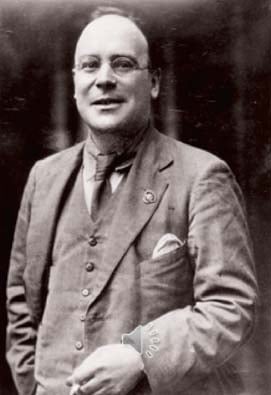
I’ve just been re-reading Will Harvey’s Selected Poems, edited by Anthony Boden and RKR Thornton.
Will Harvey is perhaps the most famous and influential of Forest poets. Born in 1888, he was one of a group of gifted young people of Gloucester who were based around the Cathedral before the First World War. He formed a lasting friendship with the tragic poet, soldier and musician Ivor Gurney, and wrote a sad tribute to him, who was incarcerated in a mental hospital a long way from Gloucester for his last 15 years.
The Cathedral was the base for a golden age of poets and musicians, including also Herbert Howells, the organist from Lydney and Ivor Novello, the composer and singer.
Will served as a brave soldier in the first world war. He notes, in his poem ‘The Ballad of Army Pay’ that ‘the maximum of danger means the minimum of pay’ and, being on the minimum of pay , he spent the last two years of the war in a German prisoner of war camp. There, he had the opportunity to develop his life as a poet, writing ‘Ducks’, the poem of his most frequently found in poetry anthologies.



This poem is a eulogy to a flock of these creatures that he observed from his prison camp. He makes them absurd, funny, wicked, and noisy, and they inspire his famous poem, which brings some relief to an unhappy period of his life. The poem ‘After Long Wanderings’ looks forward to his return to Gloucestershire, especially to Gloucester and the River Severn which celebrates another captive dream, in which he looks forward to visiting Barton Fair in Gloucester, and the ancient house (the Cathedral), ‘where Doomsday book was planned’. And, most importantly, he celebrates the River Severn, with affectionate references to Minsterworth and Framilode, and the river’s frequent and sudden change of mood.
On his return to England after the war, he became an unsuccessful lawyer, and declined into poverty with his failing legal business, being a poet not a business man. He describes himself in a ruthless way but affectionate way as a ‘rogue and drinker’. He uses Forest dialect in some of his poems, but the way in which he uses this feature will not create confusion to even the most recent incomer to the Forest. As a sportsman, he provides probably the longest description of a cricket catch, a whizzing, fierce bullet, stinging bare hands, and reminding him of far off days of youth and ‘sweet time-strangled things’. He retired to Yorkley, and died in 1957.
A very Forest-centric poem is a memorial to the old Coleford to Lydney railway line, which makes a steam railway journey into a gentle dream, surrounded by birds, bees and crawling through butterflies and green bracken, for a ‘lovely lazy hour’.
The last three poems are ‘Come Now to Sleep’, ‘The End’ and ‘Rondeau’, poignant works, a farewell with an affectionate but realistic description of himself.
Comments
This article has no comments yet. Be the first to leave a comment.